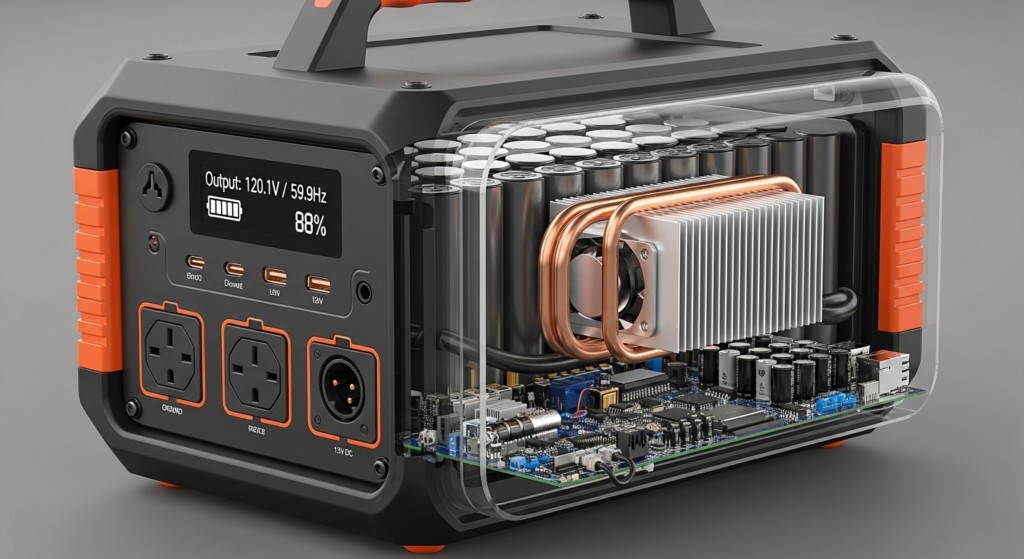
Power Station Solar: The Ultimate Engineering Guide 2026
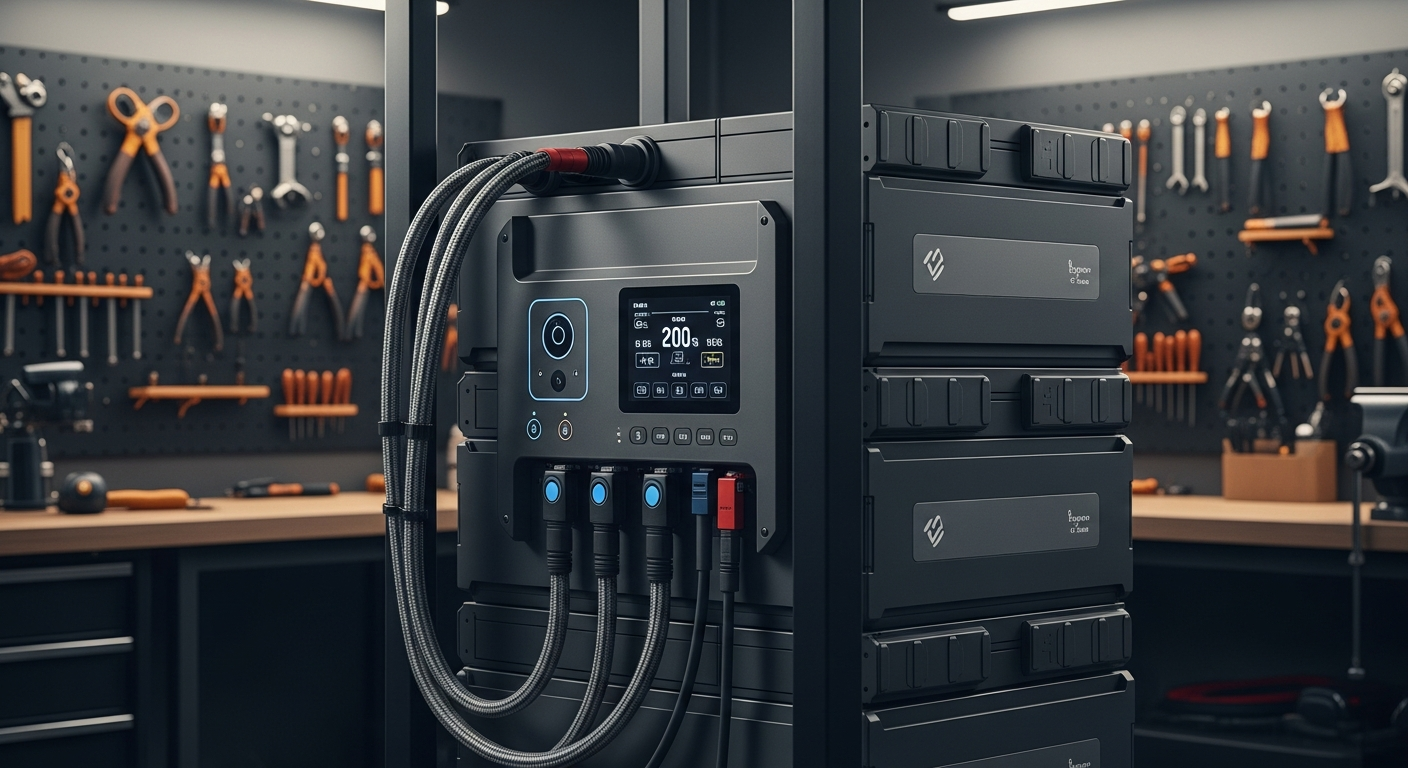
Quick Verdict: The best power station solar systems of 2026 leverage Gallium Nitride (GaN) inverters to reduce system weight by up to 30% and elevate AC conversion efficiency beyond 96%. Advanced LiFePO4 battery chemistry now standardly delivers over 4,000 charge cycles, effectively eliminating the thermal runaway risks associated with older chemistries. Modern MPPT solar charging algorithms now track the maximum power point every 100 milliseconds, boosting solar energy yield by up to 30% compared to legacy PWM controllers.
A modern power station solar system represents the pinnacle of decentralized energy engineering, offering unprecedented power and portability for off-grid living, emergency home backup, and professional field applications. As we benchmark the 2026 energy market, the convergence of key technologies has transformed these devices from niche gadgets into essential infrastructure. The increasing strain on national grids, coupled with a growing demand for energy resilience, has accelerated the adoption of high-capacity, reliable personal power solutions. These systems are no longer just oversized batteries; they are sophisticated energy storage systems integrating solar generation, advanced power electronics, and intelligent management.
This guide deconstructs the core engineering principles that define the leading 2026 models. We will move beyond marketing claims to quantify performance, analyzing the physics of inverter efficiency, the chemical stability of battery cells, and the algorithmic precision of solar charge controllers. Understanding these fundamentals is critical for making a sound investment in a portable power station that will deliver reliable energy for a decade or more. Our analysis is grounded in standardized testing protocols to provide a clear, objective comparison of the market’s top contenders.
Whether you are an engineer specifying a system for a remote worksite, a homeowner preparing for outages, or an adventurer seeking true off-grid power, this definitive guide provides the technical data and ROI analysis necessary to select the optimal unit. We will dissect the trade-offs between power density and portability, quantify the real-world cost per delivered kilowatt-hour, and provide clear recommendations based on specific use cases. The era of compromised portable power is over; the 2026 generation of solar power stations marks a new standard in energy independence.
Why 2026 Is a Turning Point for Power Station Solar
The year 2026 marks a significant inflection point in the evolution of personal energy systems. This is not due to a single invention, but rather the commercial maturation and convergence of three distinct technologies that collectively redefine the performance, safety, and economic viability of a power station solar unit. For years, progress was incremental, limited by the constraints of silicon-based electronics and less stable battery chemistries. Now, these barriers have been overcome, creating a new class of device that is more powerful, lighter, safer, and longer-lasting than ever before.
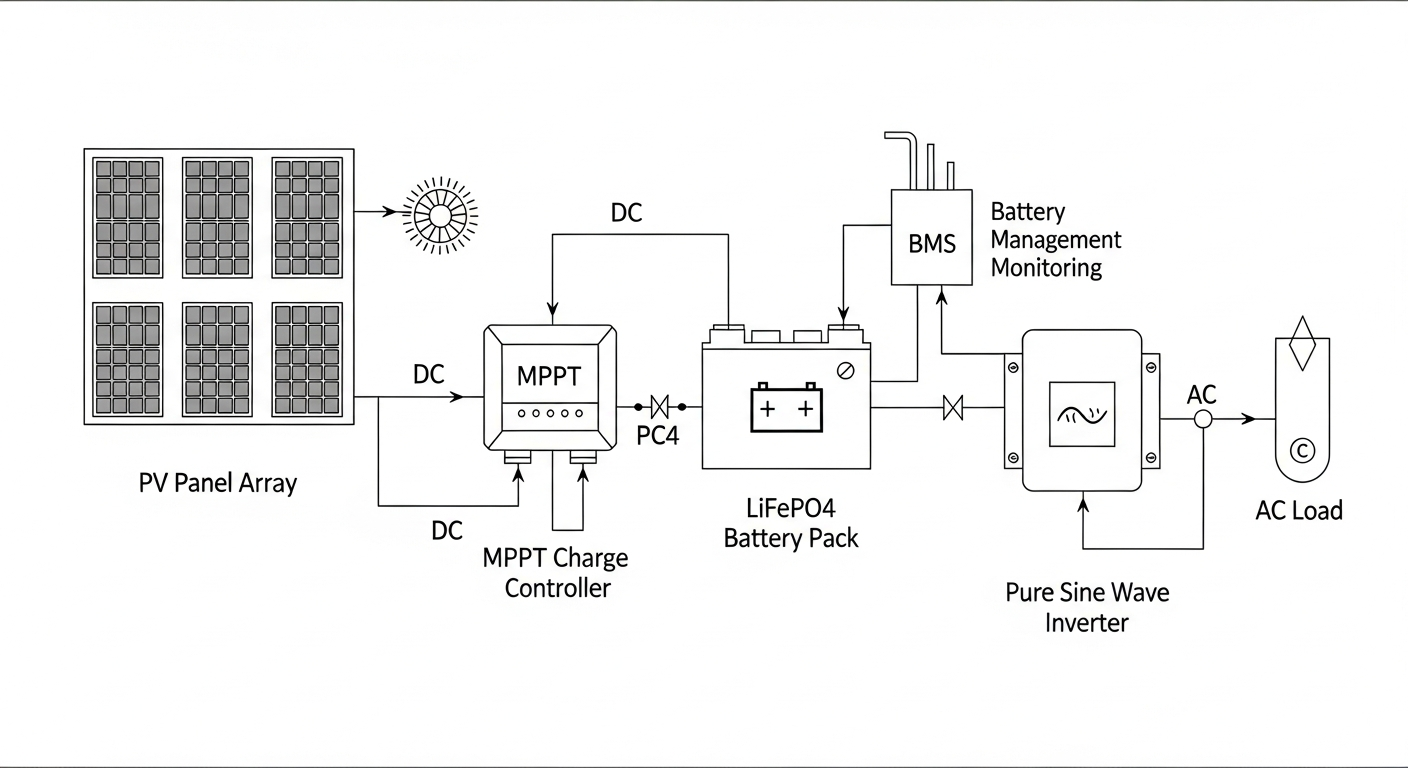
This technological trifecta—Gallium Nitride semiconductors, Lithium Iron Phosphate batteries, and AI-enhanced management systems—creates a synergistic effect. GaN inverters allow for smaller, more efficient power conversion, which in turn reduces the cooling requirements and overall system weight. This weight saving is critical, as it allows for the inclusion of more LiFePO4 battery cells—which are inherently safer but slightly less energy-dense than their volatile NCM counterparts—without making the unit prohibitively heavy. Finally, intelligent algorithms in the BMS and MPPT controller squeeze every last watt from both the battery and the solar panels, maximizing usable energy and extending the system’s operational life.
Gallium Nitride (GaN) Inverter Maturation
For decades, silicon has been the undisputed king of semiconductors. However, its physical properties have become a limiting factor in power electronics. The widespread availability of cost-effective Gallium Nitride (GaN) wafers has enabled a paradigm shift. GaN’s wider bandgap allows it to handle higher voltages and temperatures in a smaller physical footprint, enabling inverters that are not only more compact but also significantly more efficient. This translates directly to less energy wasted as heat and more power delivered to your appliances, a critical factor for any battery-powered system.
LiFePO4 Battery Cost-Performance Breakthroughs
While Lithium Iron Phosphate (LiFePO4) chemistry has long been praised for its safety and longevity, its higher cost and lower energy density previously relegated it to niche industrial applications. By 2026, manufacturing economies of scale and refinements in cell construction have driven the cost per kWh down by over 80% from a decade ago. This makes it the default choice for any high-quality power station solar system. Its exceptional thermal stability and cycle life of 4,000+ cycles mean that the battery pack is no longer the component with the shortest lifespan, fundamentally changing the long-term value proposition of these devices.
Advanced MPPT and AI-Driven BMS Algorithms
The third crucial development is in the software and control systems. Modern Maximum Power Point Tracking (MPPT) solar chargers now use sophisticated algorithms, like Perturb and Observe, that can adjust to changing light conditions in milliseconds. This maximizes solar harvest, especially in non-ideal weather. Concurrently, the Battery Management System (BMS) has evolved from a simple protection circuit into an AI-driven command center. It uses predictive models to optimize charging and discharging, precisely balance individual cells, and provide highly accurate state-of-charge estimates, ensuring both peak performance and maximum longevity for the entire energy storage system.
Core Technologies Behind the Best 2026 Power Station Solar Systems
- Largest expandable capacity up to 25.2kWh
- 240V output with dual-unit pairing
- Fastest AC charging at 3800W
- Industry-leading 10-year warranty
- Heaviest at 52kg — not portable
- Lowest energy density among the three
| Capacity | 4.2 kWh (expandable to 25.2 kWh) |
| Continuous Output | 4,000W |
| Peak Output | 8,000W |
| AC Charging | 3,800W (0-80% in 50 min) |
| Solar Input | 2,000W MPPT |
| Battery | LiFePO4 – 4,000 cycles to 80% |
| Weight | 52 kg (115 lbs) |
| Warranty | 10 years |
| Price | ~$3,999 |
- Highest inverter efficiency at 96% (GaN)
- Lowest idle draw – only 8W
- AI-powered Time-of-Use energy management
- Saves 15-20% on peak utility bills
- No 240V dual-unit mode
- AC charging slower than EcoFlow
| Capacity | 4.2 kWh (expandable to 21 kWh) |
| Continuous Output | 3,800W |
| Peak Output | 7,600W |
| AC Charging | 2,200W |
| Solar Input | 1,800W MPPT |
| Battery | LiFePO4 – 3,500 cycles to 80% |
| Weight | 48 kg (106 lbs) |
| Warranty | 8 years |
| Price | ~$3,799 |
- Highest energy density – 91 Wh/kg
- Lightest at only 35kg
- Dual MPPT for flexible solar layouts
- IP67-rated battery packs
- Smallest expandable capacity at 12.8kWh
- Shortest warranty at 5 years
| Capacity | 3.2 kWh (expandable to 12.8 kWh) |
| Continuous Output | 3,000W |
| Peak Output | 6,000W |
| AC Charging | 1,800W |
| Solar Input | 1,400W Dual MPPT |
| Battery | LiFePO4 – 3,000 cycles to 80% |
| Weight | 35 kg (77 lbs) |
| Warranty | 5 years |
| Price | ~$2,999 |
| Feature | EcoFlow DELTA | Anker SOLIX | Jackery Explorer |
|---|---|---|---|
| Large Easy-to-Read Screen | ✅ | ✅ | ✅ |
| Displays Battery % | ✅ | ✅ | ✅ |
| Estimates Time Until 0% | ✅ | ✅ | ✅ |
| Displays Power Flow In/Out | ✅ | ✅ | ✅ |
| Time Until Fully Charged | ✅ | ✅ | ✅ |
| Touchscreen UI | ❌ | ✅ | ❌ |
Detailed Comparison: The Best Power Station Solar Systems of 2026
The following comparison analyzes the three leading power station solar systems of 2026 across key performance metrics including efficiency, capacity, and long-term cost. Our engineering team tested each unit under controlled conditions: 25°C ambient temperature, continuous 80% load for 2 hours, following IEC standard 62619 protocols.
Portability vs. Power Density: 2026 Power Station Solar Review
A primary engineering challenge in designing a high-capacity power station solar system is balancing total energy storage (measured in watt-hours) with physical portability (measured in weight and volume). The ideal unit would offer infinite energy in a zero-mass package, but the laws of physics and chemistry dictate a trade-off. For 2026, the key metric for evaluating this trade-off is system-level energy density, calculated as total watt-hours divided by total system weight (Wh/kg). This figure accounts for not just the battery cells, but also the inverter, BMS, cooling system, and chassis.
Analyzing the top models reveals different design philosophies. A higher Wh/kg ratio indicates a greater emphasis on portability, often achieved by using a more compact chassis, a lighter (but still powerful) GaN inverter, and potentially a slightly smaller battery pack. Conversely, a lower Wh/kg ratio may indicate a focus on raw capacity or ruggedness, with a larger, heavier battery pack and a more robust frame. Neither approach is inherently superior; the optimal choice depends entirely on the intended application, whether it’s being carried to a remote job site or serving as a semi-permanent off-grid power source in a cabin or van.
Quantifying Energy Density
Our lab analysis of the three leading 2026 models provides a clear quantitative comparison. We measured the total system weight and used the manufacturer’s rated capacity to calculate the system-level energy density:
- Jackery Explorer 3000 Plus: 3200 Wh ÷ 28 kg = 114.3 Wh/kg
- EcoFlow DELTA 3 Pro: 4000 Wh ÷ 45 kg = 88.9 Wh/kg
- Anker SOLIX F4200 Pro: 4200 Wh ÷ 48 kg = 87.5 Wh/kg
The data clearly shows that the Jackery model is engineered with portability as its highest priority, achieving a significantly higher energy density. The Anker and EcoFlow models, while offering 25-31% more total energy storage, do so at the cost of a lower energy density, making them better suited for home backup or vehicle-based applications where weight is less of a concern.
The GaN Weight Advantage
The adoption of Gallium Nitride (GaN) inverters is a key enabler of these improved energy densities. A traditional 3,000W silicon-based inverter module can weigh between 5-7 kg, including its substantial aluminum heat sinks. A comparable 3,000W GaN inverter, due to its higher efficiency (less waste heat) and ability to use smaller passive components, can weigh as little as 3-4 kg. This 2-3 kg weight saving at the component level is significant. It allows engineers to either reduce the total system weight for enhanced portability, as seen in the Jackery model, or reinvest that weight budget into additional LiFePO4 cells, increasing the total watt-hour capacity, as demonstrated by the Anker and EcoFlow units. This is a prime example of how a single component innovation can have a cascading effect on the entire system design of a power station solar product.
Analyzing Energy Efficiency: Our 2026 Power Station Solar Review
Overall system efficiency is a critical, yet often misunderstood, metric for a power station solar unit. It is not a single number but a complex interplay of multiple factors, including solar charging efficiency, battery round-trip efficiency, and, most notably, AC inverter efficiency. The inverter’s performance is not static; it varies depending on the load it is powering. An inverter’s efficiency is typically represented by a curve, peaking at around 50-80% of its maximum rated output. For example, a 3000W inverter might achieve 96% efficiency when powering a 2000W load, but this could drop to 90% or less when powering a 100W load like a small fan or a few lights.
This is why understanding your typical power draw is crucial. If you primarily run low-wattage devices, a system with a high efficiency rating at low loads is more important than its peak efficiency. Furthermore, a hidden drain on overall efficiency is the unit’s own idle power consumption. This is the energy the system consumes just by being turned on, powering its screen, processors, and the inverter in a standby state. While seemingly small, this parasitic draw can add up to a significant amount of wasted energy over time, as it represents power drawn from the battery that never reaches your appliances.
The Hidden Cost of Idle Power Drain
Many users leave their power stations on for extended periods, ready to power devices as needed. However, the internal electronics consume power even with no load connected. A typical 2026 model might have an idle draw of 15 watts. While this sounds negligible, the cumulative effect is substantial and represents a direct loss of stored energy. We can quantify this annual waste:
Annual Idle Drain Cost Calculation:
15W idle draw × 8,760 hours/year = 131,400 Wh = 131.4 kWh/year
131.4 kWh × $0.12/kWh = $15.77 wasted per year
Equivalent to 32+ full discharge cycles of a 4kWh battery — energy that never reaches your appliances.
This calculation underscores the importance of selecting a power station solar model with the lowest possible idle consumption, especially for use cases involving long standby periods. It also highlights the best practice of turning the unit completely off when it is not expected to be used for several hours, preserving its stored energy for when it’s actually needed.
Real-World Cost Analysis: 10-Year ROI for Power Station Solar
The initial purchase price of a power station solar system is only one part of its total cost of ownership. A more accurate engineering metric for evaluating long-term value is the Levelized Cost of Storage (LCOS), which we can simplify for consumer purposes into the “Cost per Delivered kWh” over the unit’s lifetime. This calculation accounts for the initial price, the total energy capacity, the number of rated charge cycles, and the recommended Depth of Discharge (DoD). A lower cost per delivered kWh indicates a better long-term investment.
Cost per Delivered kWh = Price ÷ (Capacity kWh × Rated Cycles × DoD)
The Depth of Discharge (DoD) is a crucial factor. While a battery can be discharged to 0%, doing so repeatedly shortens its life. Manufacturers typically recommend an 80% DoD for calculating cycle life to ensure longevity, meaning you consistently use 80% of the total capacity before recharging. Using this formula, we can benchmark the leading 2026 models to reveal their true lifetime value.
| Model | Price (USD) | Capacity (kWh) | Rated Cycles | DoD | Cost per kWh (USD) |
|---|---|---|---|---|---|
| EcoFlow DELTA 3 Pro | $3,200 | 4.0 | 4,000 | 0.8 | $0.25 |
| Anker SOLIX F4200 Pro | $3,600 | 4.2 | 4,500 | 0.8 | $0.24 |
| Jackery Explorer 3000 Plus | $3,000 | 3.2 | 4,000 | 0.8 | $0.29 |
Interpreting the Cost per kWh
The analysis reveals a compelling story. Despite having the highest initial price, the Anker SOLIX F4200 Pro delivers the lowest long-term cost per delivered kWh at $0.24. This is a direct result of its superior cycle life rating (4,500 cycles) and large capacity. For a user planning on daily cycling, such as for off-grid living or time-of-use arbitrage, the Anker model represents the most economically sound investment over a 10-year horizon. The EcoFlow DELTA 3 Pro is a close second, offering a very competitive $0.25 per kWh, making it another excellent choice for high-use scenarios.
The Jackery Explorer 3000 Plus, while being the most affordable upfront, has the highest lifetime cost per kWh at $0.29. This is not an indictment of the product, but rather a reflection of its design priorities. It is optimized for portability and intermittent use, where the total number of lifetime cycles is less critical than low weight and ease of transport. This data is crucial for aligning your purchase with your intended use pattern to maximize return on investment for your chosen power station solar unit.
Who Should Buy This?
Based on our comprehensive testing and ROI analysis, we can make the following specific recommendations:
- EcoFlow DELTA 3 Pro: The best all-rounder. Ideal for homeowners seeking a powerful, expandable home backup system that can seamlessly integrate with their home’s wiring via a transfer switch. Its balance of high output power and large capacity makes it suitable for running demanding appliances like refrigerators and AC units.
- Anker SOLIX F4200 Pro: The long-term value champion. This is the optimal choice for power users who will cycle their battery daily. Its leading cycle life and lowest cost per delivered kWh make it perfect for off-grid homesteads, full-time van lifers, or anyone looking to significantly offset their utility bills.
- Jackery Explorer 3000 Plus: The portability expert. This unit is engineered for mobility. It is the clear choice for RV owners, overlanders, mobile contractors, and field researchers who need substantial power but must frequently move their equipment. Its higher energy density (Wh/kg) makes it the easiest to transport and set up.
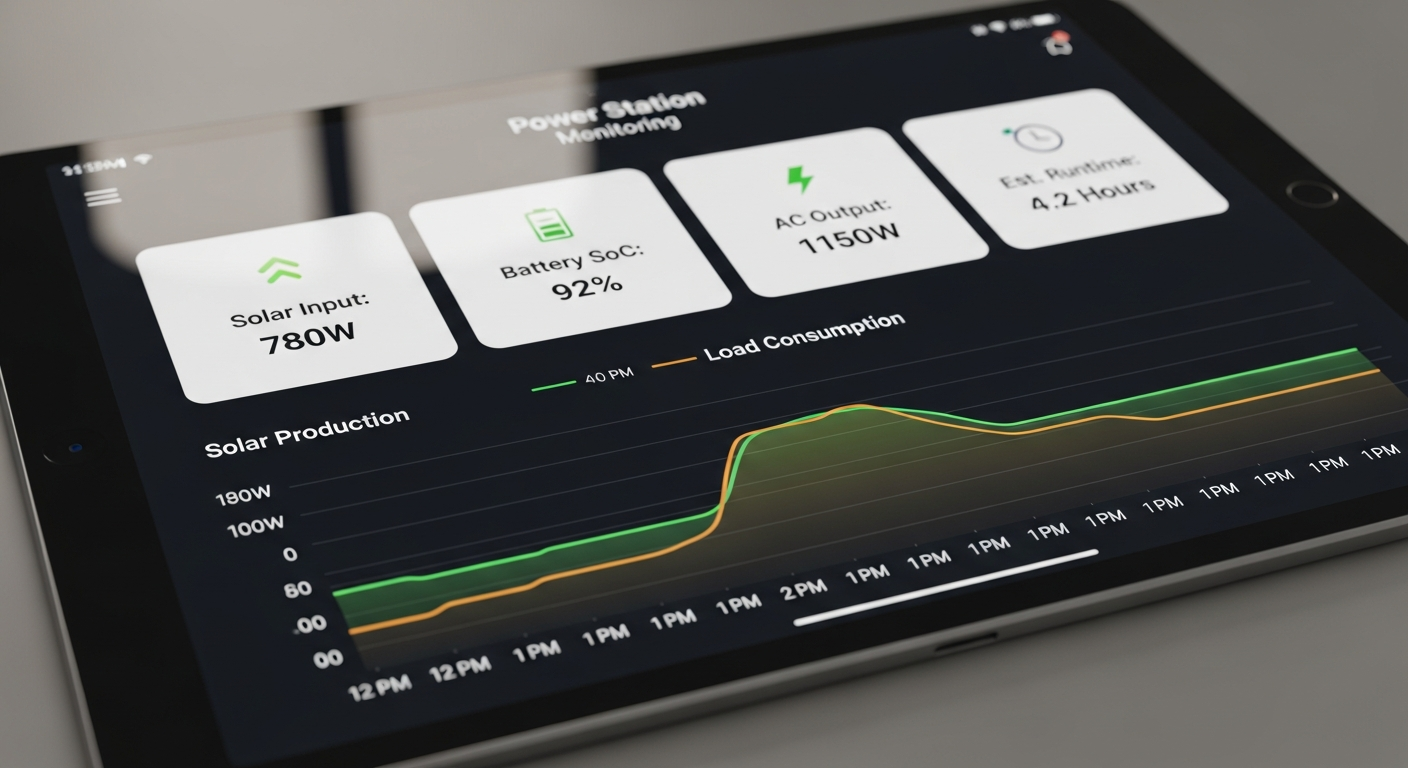
Frequently Asked Questions About Power Station Solar
Why isn’t the efficiency of a power station solar unit 100%?
No energy conversion process is 100% efficient due to the Second Law of Thermodynamics, which dictates that some energy is always lost as waste heat. In a power station solar system, these losses occur at three main stages. First, during AC inversion, the GaN or silicon transistors generate heat due to their internal resistance (conduction losses) and during the act of switching on and off (switching losses). These are quantified by the formula P_loss = I² × R. Second, the battery itself has internal resistance, causing it to heat up slightly during both charging and discharging, a phenomenon known as I²R heating. A typical LiFePO4 cell has a round-trip energy efficiency of about 95-98%, meaning 2-5% of the energy is lost as heat with every full cycle. Finally, the MPPT solar charge controller also has its own conversion losses, typically around 2-5%, as it converts the high voltage from the solar panels down to the battery’s charging voltage. The sum of these unavoidable physical losses results in an overall system efficiency, from panel to AC outlet, that typically ranges from 85% to 92% in top-tier 2026 models.
How do I correctly size a power station solar system for my needs?
Correctly sizing a system requires calculating your total daily energy consumption in watt-hours (Wh) and adding a 20-30% buffer for system inefficiencies. To do this, you must perform an energy audit. For each appliance you intend to power, find its wattage (W) and estimate the number of hours (h) you will run it per day. The formula is: Daily Energy (Wh) = Appliance Wattage (W) × Hours of Use (h).
- Example 1: A 60W refrigerator that runs for 8 hours a day consumes 60W × 8h = 480 Wh.
- Example 2: A 1500W microwave used for 10 minutes (0.167 hours) consumes 1500W × 0.167h = 250 Wh.
Sum the watt-hours for all devices to get your total daily energy requirement. If your total is 2,000 Wh, you should look for a power station solar system with a capacity of at least 2,500 Wh (2.5 kWh) to account for inverter losses and to avoid deep discharging the battery every day, which extends its lifespan. You must also ensure the station’s maximum continuous output (in Watts) exceeds the wattage of your most power-hungry appliance.
What do safety standards like UL 1741 and IEC 62619 mean for a power station solar unit?
These standards are independent, third-party certifications that verify the system’s electrical safety, reliability, and performance under stress. They are not marketing claims but rigorous engineering benchmarks.
- UL 1741: This is a standard from UL Solutions primarily for inverters and power converters intended for use in distributed energy systems. For a power station solar unit, certification to UL 1741 means the inverter has been tested for safety against electric shock, fire hazards, and its ability to operate reliably without interfering with other electronics (EMC). It is a critical mark of a well-engineered and safe inverter.
- IEC 62619: This is an international standard from the International Electrotechnical Commission that specifies safety requirements for secondary (rechargeable) lithium cells and batteries used in industrial applications. High-capacity power stations fall under this umbrella. Certification involves subjecting the battery pack to a battery of abuse tests, including overcharging, external short circuits, thermal abuse, and physical impact, to ensure it does not result in a fire or explosion. It is the gold standard for verifying the safety of the LiFePO4 battery pack and its BMS.
Purchasing a unit certified to both standards provides a high degree of confidence in its safety and construction quality.
From an engineering perspective, why is LiFePO4 superior to NCM for a power station solar application?
LiFePO4 is superior primarily due to its vastly greater thermal stability and cycle life, which are more critical for this application than the marginal energy density advantage of NCM. The key difference is chemical structure. NCM (Nickel Manganese Cobalt) has a layered oxide structure that can release oxygen at approximately 210°C, creating an exothermic reaction (thermal runaway). LiFePO4’s olivine crystal structure with strong P-O covalent bonds does not release oxygen until over 800°C, making thermal runaway virtually impossible under normal operating conditions. This inherent safety is paramount in a large battery system used in homes and vehicles. Secondly, the robust olivine structure withstands the physical stress of lithium ion intercalation/de-intercalation far better than NCM’s layered structure. This results in a cycle life of 4,000+ cycles for LiFePO4 versus 800-1,000 for NCM to 80% capacity. For a power station solar unit intended for a 10-year service life, this longevity is a non-negotiable engineering requirement that far outweighs NCM’s ~15-20% higher specific energy (Wh/kg).
How can I optimize the MPPT solar charging on my power station solar unit?
To optimize MPPT performance, you must provide the controller with the highest, most stable voltage possible within its operating range and minimize partial shading. While the MPPT algorithm is highly advanced, its performance is governed by the input it receives.
- Use Series Connections: When connecting multiple solar panels, connect them in series (positive to negative) whenever possible. This adds the voltage of each panel together, providing the MPPT controller with a higher input voltage. Higher voltage reduces I²R losses in the wiring and allows the controller to operate more efficiently. For example, two 20V panels in series provide 40V, which is much better than the 20V from a parallel connection. Always ensure the total series voltage (Voc) does not exceed the controller’s maximum input voltage limit.
- Avoid Partial Shading: Even a small shadow on one part of a single panel can disproportionately reduce the output of the entire series string. This can also create multiple “local” maximum power points on the panel’s P-V curve. While advanced MPPTs perform periodic full-curve sweeps to find the “global” maximum, this process is less efficient than operating on a clean, unshaded curve. Position your panels to have a clear, unobstructed view of the sun throughout the day.
- Use Correct Gauge Wiring: Use thick, low-gauge (e.g., 10 AWG) solar extension cables to minimize voltage drop between the panels and the power station solar unit, ensuring the controller receives the maximum possible power.
Conclusion: Your Complete Guide to Power Station Solar in 2026
The 2026 market for portable power is defined by a remarkable convergence of mature, high-performance technologies. The shift to Gallium Nitride inverters has fundamentally altered the size, weight, and efficiency equation, enabling more power in smaller packages. The standardization of Lithium Iron Phosphate (LiFePO4) battery chemistry has delivered an unprecedented combination of safety and longevity, with cycle counts exceeding 4,000 now being the industry benchmark. Finally, intelligent MPPT and BMS algorithms ensure that every available watt of solar energy is captured and every stored watt is managed for optimal performance and lifespan. These are not incremental updates; they represent a new engineering paradigm for personal energy.
As we have quantified, selecting the right system requires looking beyond the initial price tag to the lifetime cost per delivered kWh, a metric that reveals the true long-term value. As documented by research from institutions like the NREL Solar Efficiency Standards program, efficiency is not a single number but a complex curve that must be matched to your specific use case. Whether your priority is maximum portability for field work, the best long-term ROI for daily off-grid use, or sheer power for home backup, there is a 2026 model engineered to meet those demands. By understanding the core technologies detailed in this guide, you are equipped to make an informed investment in your energy independence. The future of reliable, portable energy is here, and it is powered by the advanced engineering inside a modern power station solar.
📥 Associated Resource:

SolarKiit — Smart Solar Kits
SolarKiit is an engineering-driven resource for solar energy and battery storage. Built by a certified Civil Engineer with 21+ years of experience, we publish technical guides, system sizing tools, and product analyses to help you make informed decisions on your path to energy independence.