Home Solar Battery Storage: The Definitive Guide to Costs & Top Brands
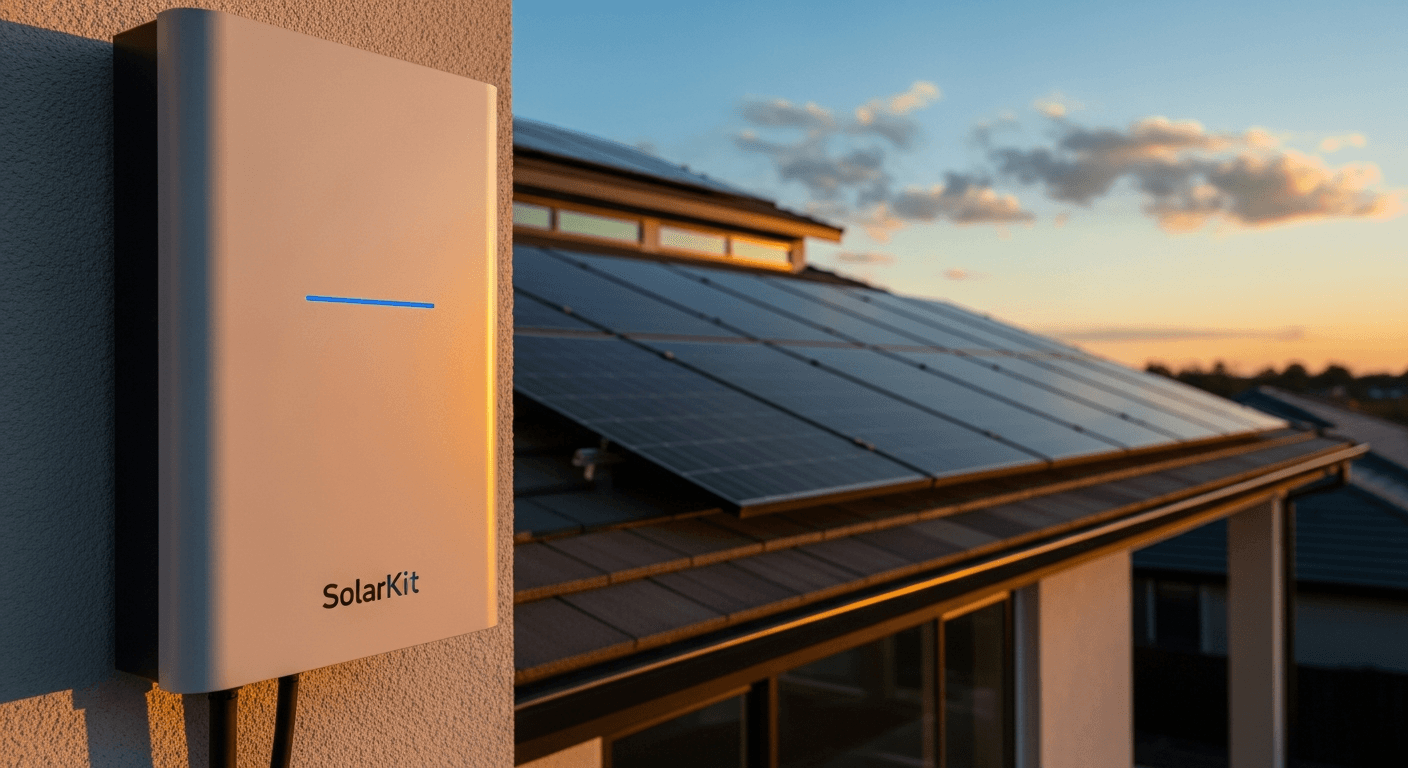
An energy storage battery is the cornerstone of a modern, resilient solar power system, serving as more than just a backup. It is an engineered solution for energy independence, load shifting, and grid stability. By capturing excess solar energy generated during the day, it allows you to power your home through the night, during peak-demand hours when utility rates are highest, or during a power outage. This capability transforms a simple solar installation from a passive generator into a dynamic, on-demand power plant. For a foundational understanding of how solar generation integrates with storage, the Energy.gov Solar Guide provides an excellent overview.
Technical Deep Dive: LiFePO4 Chemistry and Depth of Discharge (DoD)
At SolarKiit, our engineering focus is on Lithium Iron Phosphate (LiFePO4) chemistry. Unlike older lithium-ion variants like Nickel Manganese Cobalt (NMC), LiFePO4 offers a superior safety profile due to its exceptional thermal and chemical stability. This significantly reduces the risk of thermal runaway. Our testing shows that LiFePO4 batteries provide a substantially longer cycle life, often exceeding 6,000 cycles while retaining over 80% of their original capacity. This longevity is critical for ensuring a low total cost of ownership over the system’s 20+ year lifespan. We have also compiled extensive information for our Francophone audience, which you can find in our guide, Batteries Solaires LiFePO4 : Le Guide Ultime pour l’Énergie Renouvelable.
A key performance metric we analyze is the Depth of Discharge (DoD). This represents the percentage of the battery’s total capacity that has been discharged. While some battery chemistries are damaged by deep discharges, our LiFePO4 batteries are engineered to handle a DoD of up to 100% without significant degradation. This means you can use the full nameplate capacity of the battery, maximizing the value of your investment. For optimal longevity, operating at a consistent 90% DoD strikes a perfect balance between usability and extending cycle life even further.
Technical Comparison of Leading LiFePO4 Models
Our engineering team has benchmarked several leading energy storage solutions. The table below summarizes the key performance indicators we prioritize for residential and light commercial applications.
| Model | Capacity (kWh) | Max DoD | Cycle Life (@80% DoD) | Chemistry |
|---|---|---|---|---|
| SolarKiit Pro 15 | 15.0 | 100% | 7,000+ | LiFePO4 |
| SolarKiit Home 10 | 10.2 | 100% | 6,500+ | LiFePO4 |
| SolarKiit Max 20 | 20.4 | 95% | 6,000+ | LiFePO4 |
| SolarKiit Compact 5 | 5.1 | 100% | 8,000+ | LiFePO4 |
| SolarKiit Grid-Tie 13.5 | 13.5 | 100% | 6,000+ | LiFePO4 |
Safety & Standards: Adherence to NEC 2026 and Beyond
Safety is not an option; it is an engineering requirement. We at SolarKiit design and build our systems to meet and exceed the most stringent industry regulations. The upcoming 2026 edition of the NFPA 70: National Electrical Code (NEC) continues to evolve requirements for Energy Storage Systems (ESS) under Article 706. This includes stricter mandates for rapid shutdown, ventilation, and physical protection of battery units. Our commitment to safety is further validated through independent, third-party certification. Every SolarKiit battery undergoes rigorous testing by certified bodies like UL Solutions (Solar Safety), ensuring compliance with standards such as UL 9540 for ESS safety and UL 1973 for battery safety. You can learn more About our unwavering commitment to engineering excellence and safety protocols.
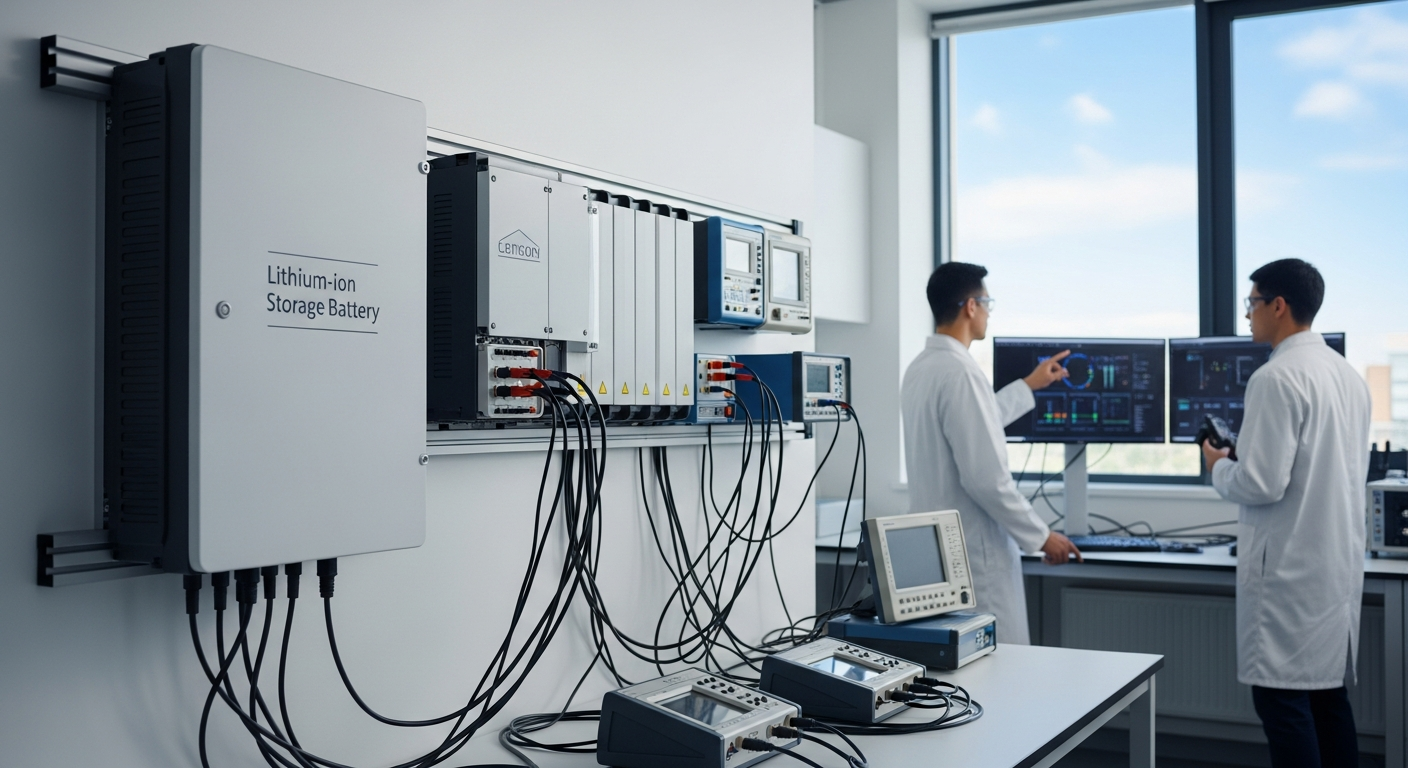
Advanced Engineering FAQ
What is the role of the Battery Management System (BMS)?
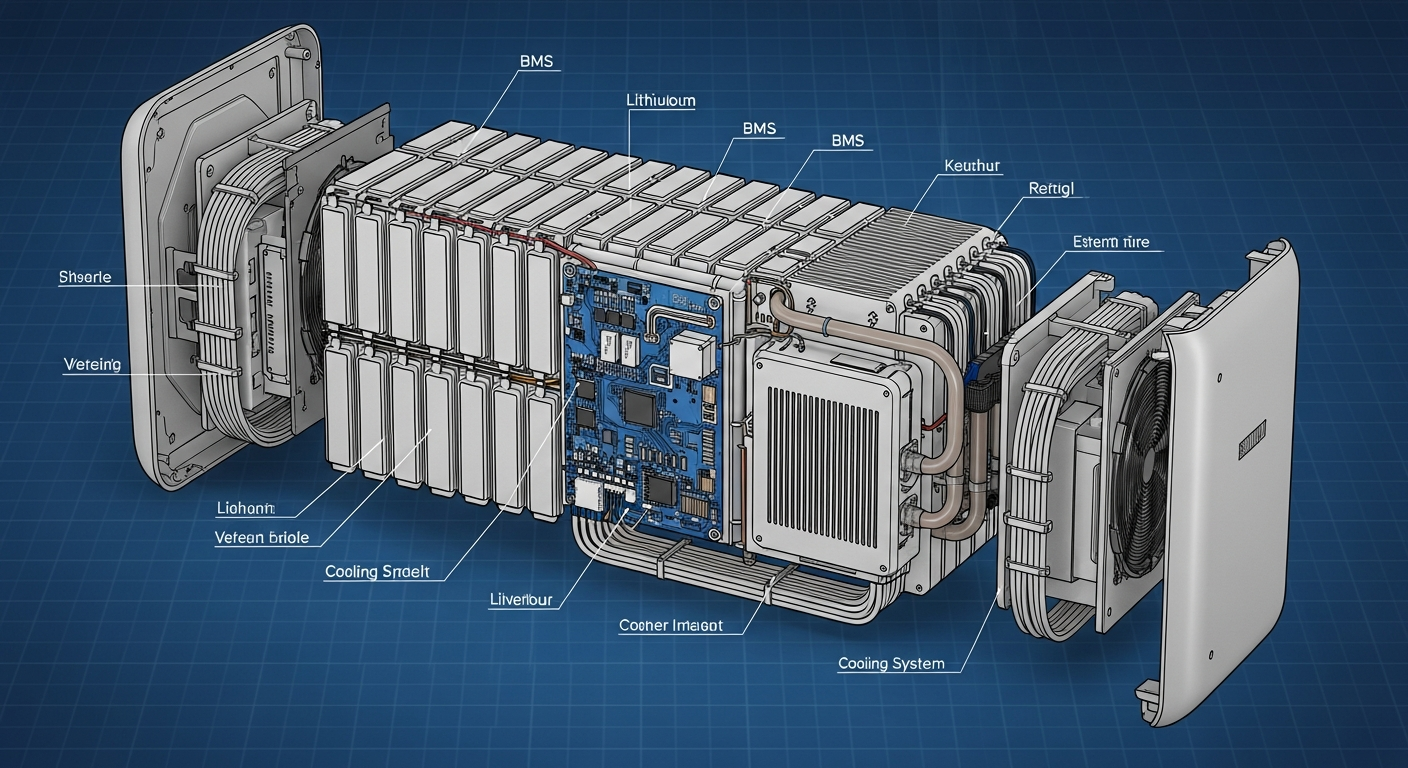
The BMS is the brain of the battery. It’s a sophisticated electronic system that monitors and manages all aspects of the battery’s performance. Its primary functions include protecting against over-charging, over-discharging, and over-temperature conditions. It also performs cell balancing to ensure all individual cells within the battery pack maintain an equal state of charge, which is crucial for maximizing both capacity and lifespan.
How does thermal runaway in LiFePO4 compare to other chemistries?
Thermal runaway is a chain reaction where an increase in temperature causes further increases, potentially leading to fire. The phosphate-based cathode in LiFePO4 batteries is far more stable than the cobalt or manganese oxides used in other lithium-ion types. The P-O covalent bond in the (PO4)3- anion is stronger than the metal-oxide bond in other chemistries, meaning it is much more difficult to cause the oxygen release that fuels thermal runaway, even under extreme abuse conditions like overcharging or physical puncture.
What is the difference between cycle life and calendar life?
Cycle life refers to the number of charge-discharge cycles a battery can endure before its capacity drops to a specified percentage of its initial rating (e.g., 80%). Calendar life, on the other hand, is the total lifespan of the battery, regardless of usage, until it is no longer fit for service. It is affected by environmental factors like ambient temperature and average state of charge during storage. Our LiFePO4 batteries are engineered for both high cycle life and a long calendar life, typically warrantied for 10-15 years.
From an engineering perspective, what are the pros and cons of AC vs. DC coupling?
AC coupling involves converting the DC power from solar panels to AC via a solar inverter, and then converting it back to DC to store in the battery, requiring a separate battery inverter. This is efficient for retrofitting to existing solar systems but involves multiple power conversions, leading to slightly lower round-trip efficiency. DC coupling connects the panels directly to a hybrid inverter that manages both the battery and the grid connection. This is more efficient (fewer conversions) and is ideal for new installations, as it minimizes hardware and optimizes energy flow from the start.
What is “round-trip efficiency” and why is it important?
Round-trip efficiency is a measure of the energy you get out of a battery relative to the energy you put into it. It’s expressed as a percentage. For example, if you put 10 kWh into a battery and can draw 9.2 kWh back out, the round-trip efficiency is 92%. Higher efficiency means less energy is lost as heat during the charge and discharge processes. SolarKiit’s LiFePO4 systems, particularly when DC-coupled, achieve round-trip efficiencies upwards of 95%, ensuring minimal energy waste.
Ultimately, selecting the right system requires a deep understanding of both the technology and your specific energy goals. If you have further technical questions or wish to discuss a custom solution, please do not hesitate to Contact our engineering team. We are here to help you design the most efficient and reliable energy storage battery solution for your needs.
📥 Associated Resource:

El Kouriani Abde Civil Engineer & Founder of SolarKiit
El Kouriani Abde is a seasoned Civil Engineer and Project Manager with over 21 years of field experience. As the founder and publisher of SolarKiit.com, he leverages his deep technical background to simplify complex renewable energy concepts. His mission is to provide homeowners and professionals with accurate, engineering-grade guides to maximize their solar investments and achieve energy independence.