Ultimate Guide: Battery Storage System for Home | Top 2026 Models & Buyer’s Guide | SolarKiit
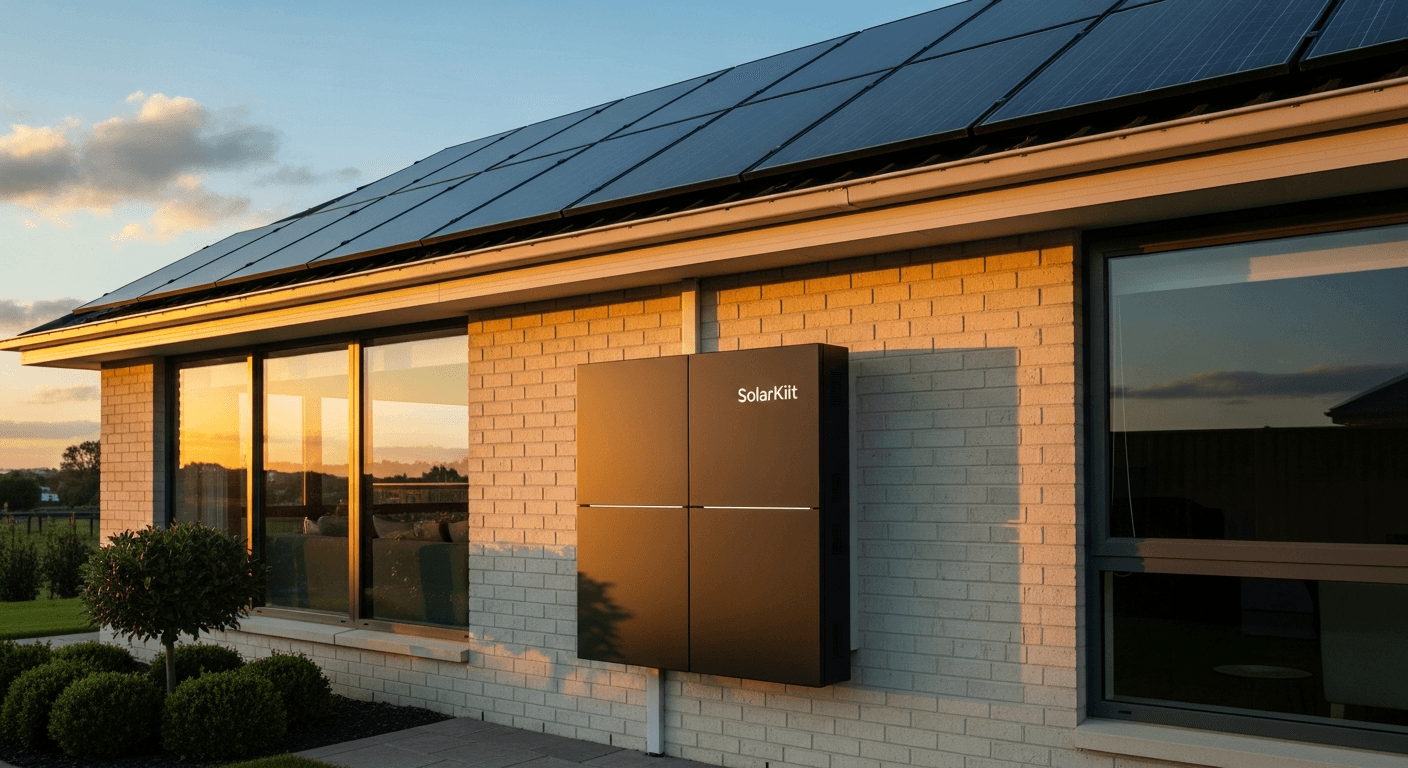
The Ultimate Engineer’s Guide to the Best Battery Storage System for Home (2024)
An battery storage system for home is no longer a niche product for off-grid enthusiasts; it has become a cornerstone of modern residential energy architecture. As a Senior Solar Solutions Architect at SolarKiit, I’ve witnessed this evolution firsthand. These systems represent the critical link between intermittent renewable generation, like solar, and the consistent power demands of a modern household. They offer a trifecta of benefits: energy independence during grid outages, significant financial savings through the arbitrage of time-of-use electricity rates, and a reduced carbon footprint by maximizing the self-consumption of clean, solar-generated power. At SolarKiit, we believe in empowering homeowners with not just products, but with deep technical knowledge. You can learn more about our mission and the experts behind our analysis on our About page.
A Technical Deep Dive into Battery Chemistry and Physics
To truly understand the value and performance of a modern home energy storage solution, we must look beyond the marketing specifications and delve into the fundamental science. The dominant chemistry in the residential market for 2024 is, without question, Lithium Iron Phosphate (LiFePO4). While other lithium-ion variants like Nickel Manganese Cobalt (NMC) offer higher energy density, our engineering analysis at SolarKiit concludes that LiFePO4’s profile of safety, longevity, and stability is vastly superior for a stationary home application.
The Electrochemical Superiority of LiFePO4
The core of LiFePO4’s safety lies in its molecular structure. The battery operates through the process of intercalation, where lithium ions move from the graphite anode to the iron phosphate cathode during discharge, and vice-versa during charging. The critical component is the cathode’s olivine crystal structure. In LiFePO4, the oxygen atoms are bound to phosphorus in a powerful covalent P-O bond within the (PO4)³⁻ polyanion. This bond is exceptionally strong, making it incredibly difficult to release oxygen, even under extreme thermal stress. This is the fundamental reason LiFePO4 is virtually immune to thermal runaway, a catastrophic failure mode common in oxide-based cathodes (like NMC or LCO) where oxygen can be liberated at high temperatures, creating an exothermic reaction with the electrolyte that feeds on itself. From an engineering perspective, this isn’t just a feature; it’s the primary reason we recommend this chemistry for an installation inside a family home.
Deconstructing Depth of Discharge (DoD) and Cycle Life
Depth of Discharge (DoD) refers to the percentage of the battery’s total capacity that has been discharged. A 10kWh battery with a 90% DoD has 9kWh of usable energy. However, this single number belies a complex relationship with cycle life. A battery’s lifespan is not a fixed number of cycles but is inversely proportional to the depth of those cycles. Cycling a LiFePO4 battery from 100% down to 0% (a 100% DoD cycle) imparts significant physical stress on the electrode materials, causing micro-fracturing and accelerating the degradation of the Solid Electrolyte Interphase (SEI) layer on the anode. In contrast, operating within a narrower State of Charge (SoC) window, for example, from 80% down to 20% (a 60% DoD cycle), can increase the total number of cycles by a factor of three or more. A high-quality Battery Management System (BMS) will manage this automatically, but it’s a key reason why a battery warrantied for 6,000 cycles is often based on an 80% DoD assumption. The total energy throughput (cycles x DoD x capacity) is the true measure of a battery’s lifetime value.
The Physics of Energy Density and C-Rate
Energy density, measured in watt-hours per kilogram (Wh/kg) or watt-hours per liter (Wh/L), is a common point of comparison. While NMC batteries can exceed 250 Wh/kg, LiFePO4 typically sits in the 120-160 Wh/kg range. For a vehicle, this is a major drawback. For a battery storage system for home, where the unit is stationary in a garage or basement, this lower density is a worthy trade-off for the immense gains in safety and cycle life. The C-rate defines how quickly a battery can be charged or discharged relative to its capacity. A 10kWh battery discharging at 10kW has a 1C discharge rate. High C-rates are demanding, increasing internal resistance and generating heat (I²R losses). This is known as the Peukert effect, where the effective capacity of the battery decreases at higher discharge rates. A well-engineered system is designed to handle the peak loads of a home (like an HVAC startup, which can be a 3-4C momentary draw) without significant voltage sag or long-term degradation. The ongoing research documented by institutions like the NREL Best Research-Cell Efficiency program continues to push the boundaries of all battery chemistries, but the fundamental trade-offs remain.
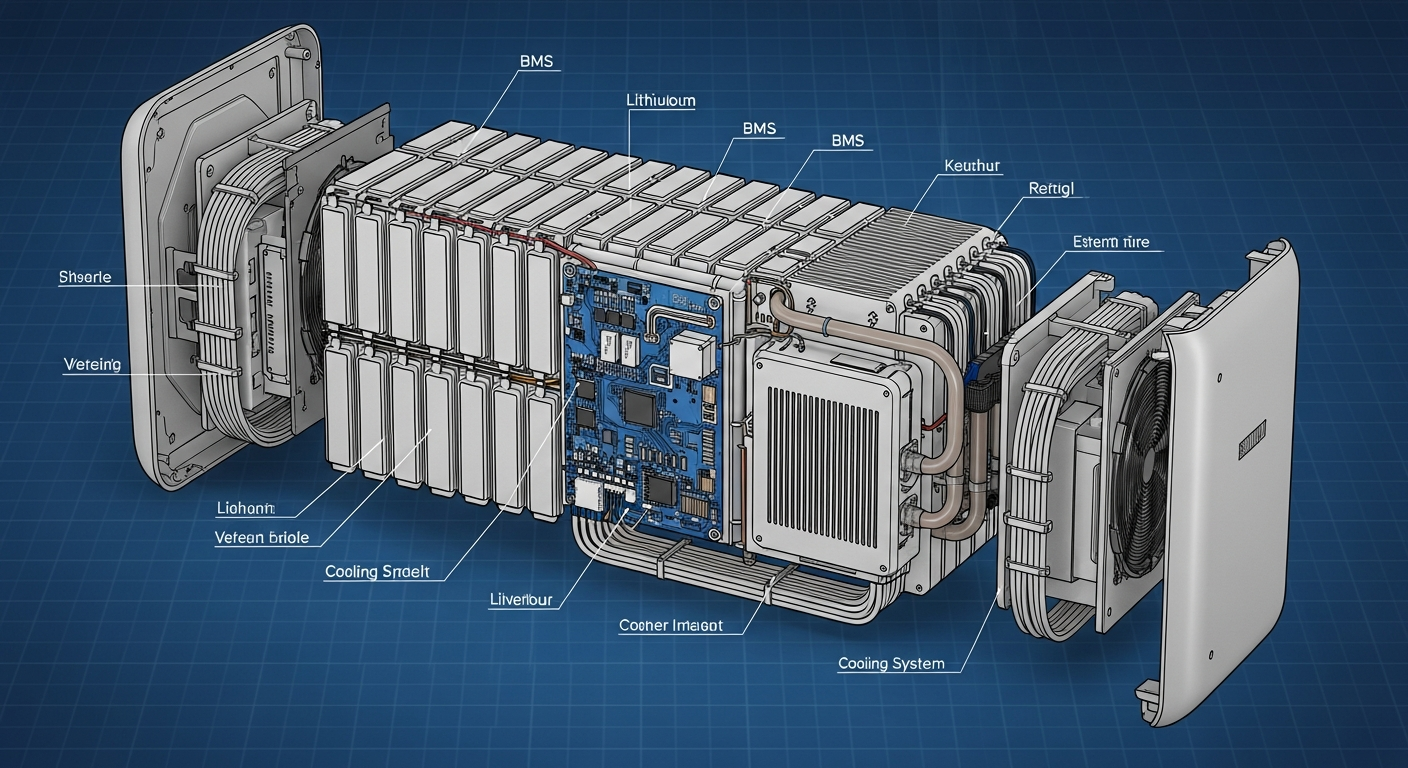
The Definitive Engineering Analysis of a Battery Storage System for Home: 2024 Model Comparison
Our engineering team at SolarKiit has rigorously evaluated the top contenders for 2024. The following table provides a high-level technical comparison based on our findings and manufacturer data. This is not an exhaustive list but represents the benchmarks for performance in the current market.
| Model | Chemistry | Usable Capacity (kWh) | Peak Power (kW) | Continuous Power (kW) | Round-trip Efficiency (%) | Warranty |
|---|---|---|---|---|---|---|
| Tesla Powerwall 3 | NMC | 13.5 | 11.5 (Grid-tied) | 11.5 (Grid-tied) | ~90% | 10 Years, 70% retention |
| Enphase IQ Battery 5P | LiFePO4 | 5.0 (Stackable) | 7.68 (10 sec) | 3.84 | ~96% | 15 Years or 6,000 cycles |
| SolarEdge Home Battery | NMC | 9.7 | 7.5 | 5.0 | ~94.5% | 10 Years, 70% retention |
| FranklinWH aPower | LiFePO4 | 13.6 | 10.0 | 5.0 | ~89% | 12 Years or 43MWh throughput |
| SunPower SunVault | LiFePO4 | 13.0 / 19.5 | 8.8 | 6.8 | ~85% | 10 Years, 70% retention |
Safety Protocols, Certifications, and Electrical Code Compliance
A battery is not just an appliance; it is a significant piece of electrical infrastructure integrated into your home. Safety is non-negotiable. The industry is governed by a stringent set of codes and standards designed to ensure these systems operate safely for decades.
The primary governing document in the United States is the NFPA 70: National Electrical Code (NEC). The upcoming 2026 revision continues to refine Article 706, which is dedicated to Energy Storage Systems (ESS). Key provisions that we as engineers must adhere to include specific requirements for ventilation to prevent the accumulation of off-gassing, mandated clearance zones around the equipment, and the placement of clearly marked emergency disconnects. Furthermore, NEC Article 690, which covers solar PV systems, mandates rapid shutdown capabilities. This function de-energizes conductors to a safe voltage level within seconds, protecting first responders from shock hazards during an emergency.
Beyond the electrical code, product-level certification is paramount. Look for systems certified by a Nationally Recognized Testing Laboratory (NRTL). The most critical certification is UL 9540, the Standard for Energy Storage Systems and Equipment. This is a system-level standard that evaluates how the battery, inverter, and control software function together. It includes rigorous testing for fire detection and suppression. A key part of this is the UL 9540A test method, which is a large-scale fire test to assess the potential for thermal runaway and determine the fire and explosion hazard. A system that has passed UL 9540A testing has demonstrated, under extreme conditions, that a single cell failure will not cascade into a catastrophic event. This is where LiFePO4’s inherent chemical stability provides a massive advantage. Reputable bodies like UL Solutions (Solar Safety) provide the third-party validation that is essential for any product we would consider installing in a client’s home.
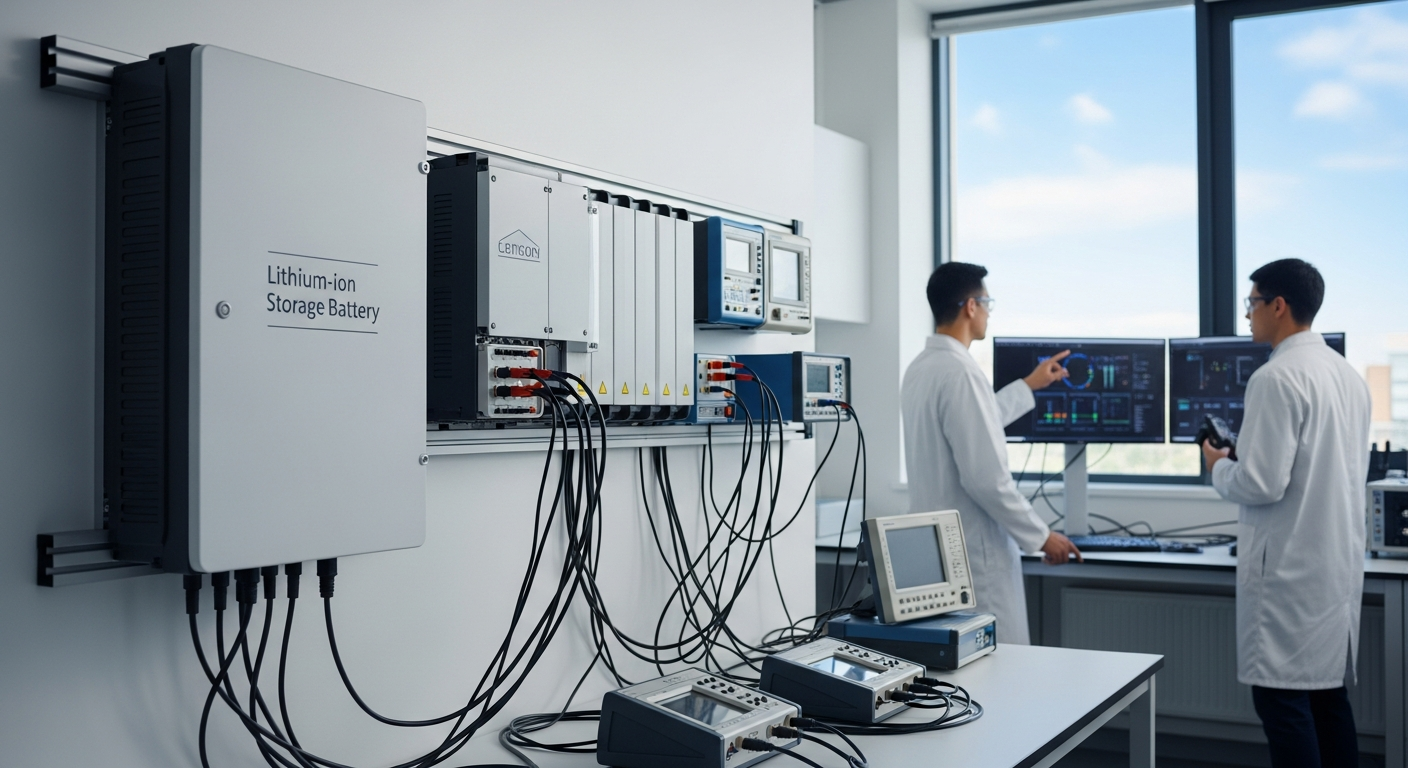
Advanced Engineering FAQ
How does AC-coupling vs. DC-coupling impact overall system efficiency and design?
This is a fundamental system architecture question. In a DC-coupled system, solar panels generate DC power, which is fed through a charge controller directly to the DC battery. When the home needs power, the battery discharges DC power to an inverter, which converts it to AC for your appliances. This is highly efficient for storing solar energy, as it involves only one inversion step (DC to AC) for consumption. However, if you are adding a battery to an existing solar installation that already has a grid-tied inverter, an AC-coupled system is often more practical. Here, the solar panels’ DC power is first converted to AC by the solar inverter. To charge the battery, this AC power must be converted back to DC by the battery’s integrated inverter/charger. When the battery discharges, it converts the DC power back to AC again. This “double inversion” process (DC-AC-DC-AC) introduces additional efficiency losses, typically reducing round-trip efficiency by 3-5%. The choice depends on whether you are installing a new system (favoring DC-coupling) or retrofitting (favoring AC-coupling). Understanding these losses is key to maximizing ROI, a topic we explore further in our Solar Inverter Efficiency: The Ultimate Guide to Maximizing Your PV System’s Output & ROI.
What is the role of the Battery Management System (BMS) beyond basic protection?
The BMS is the sophisticated brain of the battery system, and its role extends far beyond simple over-voltage or under-voltage cutoffs. Its most critical advanced function is cell balancing. A battery pack consists of hundreds or thousands of individual cells, each with slight variations in capacity and internal resistance. Over many cycles, these cells can become imbalanced, with some cells fully charged while others lag. The BMS uses either passive balancing (bleeding excess charge from higher-voltage cells through a resistor) or active balancing (using small converters to shuttle energy from stronger cells to weaker cells) to keep all cells at an identical state of charge. This is crucial for maximizing the pack’s usable capacity and preventing the premature failure of individual cells, which would compromise the entire pack. Furthermore, the BMS runs complex algorithms, like Coulomb counting corrected by periodic open-circuit voltage readings, to provide an accurate SoC estimation. It also constantly monitors cell temperatures and can throttle charge/discharge rates to prevent overheating or damage in extreme cold.
Can I stack multiple batteries from different brands or with different ages?
From an engineering standpoint, this is strongly discouraged and, in most cases, will void the warranty of all units involved. The reasons are multifaceted. First, different manufacturers use proprietary BMS communication protocols. A FranklinWH BMS cannot communicate with an Enphase BMS; they cannot coordinate their charge/discharge cycles or perform pack-level cell balancing. This leads to a scenario where one battery might be shouldering the majority of the load, causing accelerated degradation. Second, even with batteries of the same brand, mixing a new battery with one that is several years old creates an impedance mismatch. The older battery will have higher internal resistance due to age and cycling. When connected in parallel, the newer, lower-resistance battery will inherently handle a disproportionate amount of the current during high-power charge and discharge events. This imbalance leads to inefficient operation and drastically shortens the lifespan of the newer unit, as it is effectively being overworked to compensate for the older one. Always use identical, same-age models for expansion.
How do ambient temperature extremes affect LiFePO4 performance and longevity?
While LiFePO4 is robust, its performance is still governed by the laws of thermodynamics and electrochemistry. At low temperatures (approaching 0°C or 32°F), the viscosity of the liquid electrolyte increases, which slows down the mobility of lithium ions. This increases the battery’s internal resistance, reducing its ability to deliver high power (lower C-rate capability) and making it less efficient. Charging a lithium-ion battery below freezing is particularly dangerous as it can cause lithium plating on the anode surface—an irreversible process that permanently reduces capacity and can create internal short circuits. A quality BMS will prevent charging below a set temperature (typically 0-5°C). Conversely, at high temperatures (above 45°C or 113°F), while power output may temporarily increase, the rate of parasitic side reactions within the cell accelerates dramatically. This primarily involves the degradation of the SEI layer, which consumes lithium ions and electrolyte, leading to a permanent loss of capacity. The ideal operating temperature for a LiFePO4 battery is between 15°C and 25°C (60°F to 77°F). Systems with active thermal management (fans or liquid cooling) are superior for installations in non-conditioned spaces like garages in hot climates.
What is “islanding,” and how does a home battery system enable it safely?
Islanding refers to the condition where a distributed generator, like a solar PV system, continues to power a location even though the main electrical grid is de-energized. For a standard grid-tied solar system without a battery, this is extremely dangerous. A utility worker attempting to repair a downed power line could be electrocuted by the power being back-fed onto the grid. To prevent this, all grid-tied inverters are required by UL 1741 to have “anti-islanding” protection, causing them to shut down within milliseconds of detecting a grid failure. A battery storage system enables safe, intentional islanding. When the grid fails, an Automatic Transfer Switch (ATS)—a core component of the battery system—physically disconnects the home’s critical load panel from the grid lines. Only after this physical separation is confirmed does the battery’s inverter begin to form a stable, local microgrid, using the battery’s stored energy to power the home. The solar panels, if present, can then safely continue to operate and recharge the battery, as they are now part of this isolated microgrid and have no connection to the external grid.
Conclusion: Engineering Your Energy Future
Choosing a battery storage system for your home is a significant engineering decision that impacts your home’s resilience, finances, and environmental footprint for years to come. By understanding the core principles of battery chemistry, the nuances of performance metrics like DoD and C-rate, and the critical importance of safety standards like the NEC and UL 9540, you can make an informed choice. The technology has matured, and with robust LiFePO4 options leading the market, homeowners now have access to safe, reliable, and long-lasting solutions. If you are ready to take the next step in designing a resilient energy solution for your property, please do not hesitate to Contact our team of solutions architects. We are here to help you engineer the perfect battery storage system for home.
📥 Associated Resource:

El Kouriani Abde Civil Engineer & Founder of SolarKiit
El Kouriani Abde is a seasoned Civil Engineer and Project Manager with over 21 years of field experience. As the founder and publisher of SolarKiit.com, he leverages his deep technical background to simplify complex renewable energy concepts. His mission is to provide homeowners and professionals with accurate, engineering-grade guides to maximize their solar investments and achieve energy independence.