
Ultimate Guide: OEM/ODM Portable Power Station Manufacturing: Engineering & Supply Chain
Portable Power Station Manufacturer: The Ultimate 2026 Guide to Engineering & Supply Chain
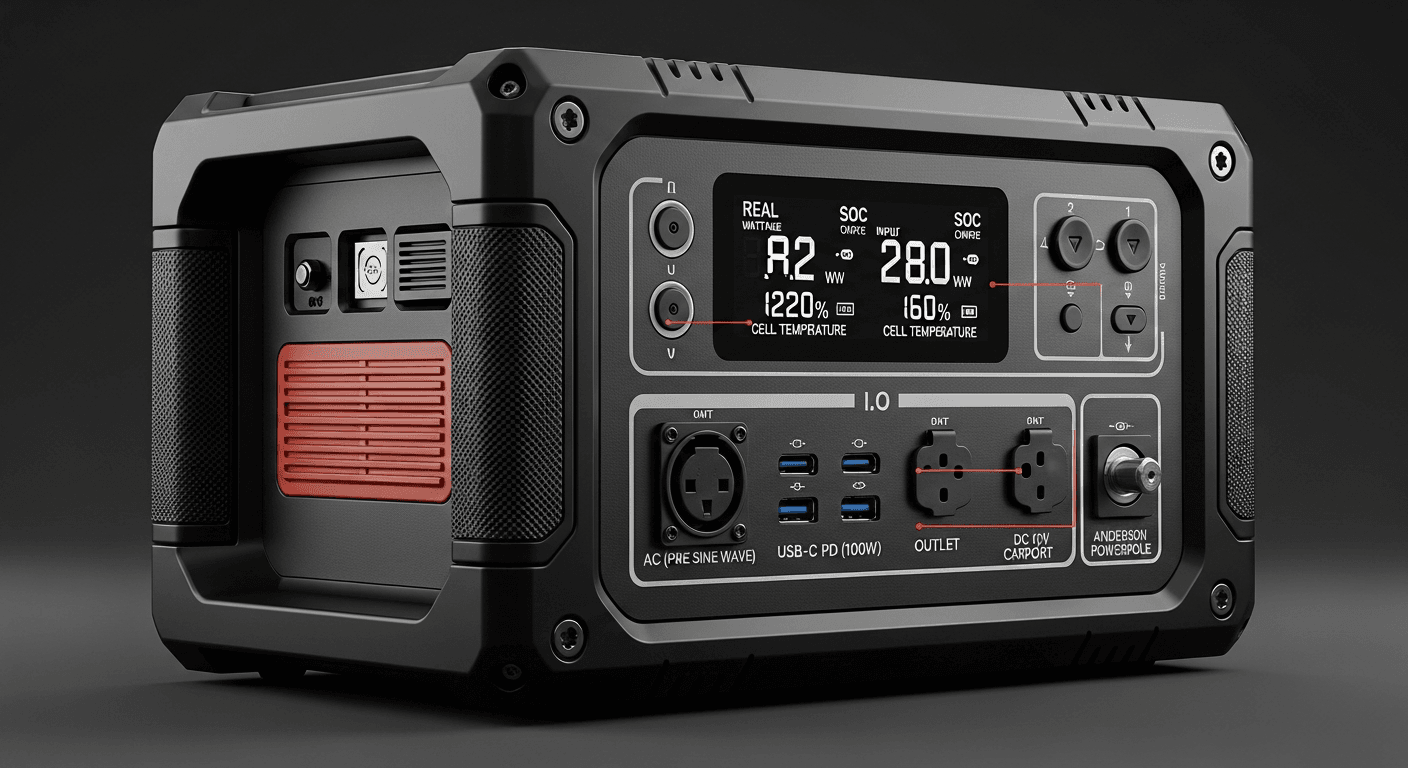
A Portable Power Station Manufacturing today stands at the nexus of a global energy paradigm shift. As we engineer solutions for the 2026 landscape, the imperatives are clear: move beyond simple assembly and embrace deep, first-principles engineering. The market is no longer driven by novelty but by necessity—a response to aging grid infrastructure, increasing climate volatility, and a sophisticated prosumer class demanding energy autonomy.
At SolarKiit, we don’t just build boxes that store electricity; we architect resilient, efficient, and safe power ecosystems. This guide deconstructs the complex engineering and supply chain logistics that separate a market leader from the mass of assemblers. We will dissect the physics, calibrate the mathematics of system design, and benchmark the components that define a superior product.
This is not a marketing overview; it is a technical reference for engineers, procurement specialists, and prosumers who need to understand the “why” behind the specifications. The transition to decentralized power is accelerating, and the quality of the hardware will determine its success. For more information on our mission and engineering philosophy, you can learn more About us and our commitment to renewable innovation.
The Core Physics: From Photon to Power Outlet
Understanding the fundamental science is non-negotiable for any serious portable power station manufacturer. The process is a symphony of quantum mechanics, electrochemistry, and power electronics. It begins with a photon and ends with a stable 120V AC waveform, and every step in between is an opportunity for optimization or failure.
Photon Harvesting & Electron Flow: Portable Power Station Manufacturing
The journey starts with a solar panel. When a photon with sufficient energy strikes a silicon atom in a photovoltaic (PV) cell, it excites an electron, elevating it to a higher energy state and creating an “electron-hole” pair. This is the photoelectric effect. An internal electric field, created by doping the silicon to form a p-n junction, directs these free electrons to flow in a single direction. This flow of electrons is, by definition, a direct current (DC).
The efficiency of this process, or Photon Harvesting Efficiency, is governed by the material’s bandgap energy and its crystalline purity. Monocrystalline panels, with their uniform lattice structure, offer lower internal resistance and higher efficiency. This is a standard we benchmark against the NREL Best Research-Cell Efficiency chart to drive our R&D and ensure peak performance in real-world applications.
LiFePO4 Chemistry: The Science of Stability
The harvested DC energy is stored in a battery. While many chemistries exist, Lithium Iron Phosphate (LiFePO4) has become the gold standard for safety and longevity. The reason lies in its molecular structure; unlike Lithium Cobalt Oxide (LCO) or Nickel Manganese Cobalt (NMC) cathodes, LiFePO4 utilizes an olivine crystal structure. Within this structure, the strong covalent P-O bond in the phosphate (PO₄)³⁻ polyanion creates immense thermal and chemical stability.
During discharge, lithium ions de-intercalate from the LiFePO4 cathode and travel through the electrolyte to intercalate into the graphite anode, with the process reversing during charging. This structure is highly resistant to oxygen release during overcharging or thermal stress, which is the primary trigger for thermal runaway in other lithium-ion chemistries. This inherent safety at the atomic level is why we exclusively engineer our systems with this chemistry, a topic we explore further in our guide to Batteries Solaires LiFePO4.
The Digital Handshake: BMS, MPPT, and Inverter Synergy
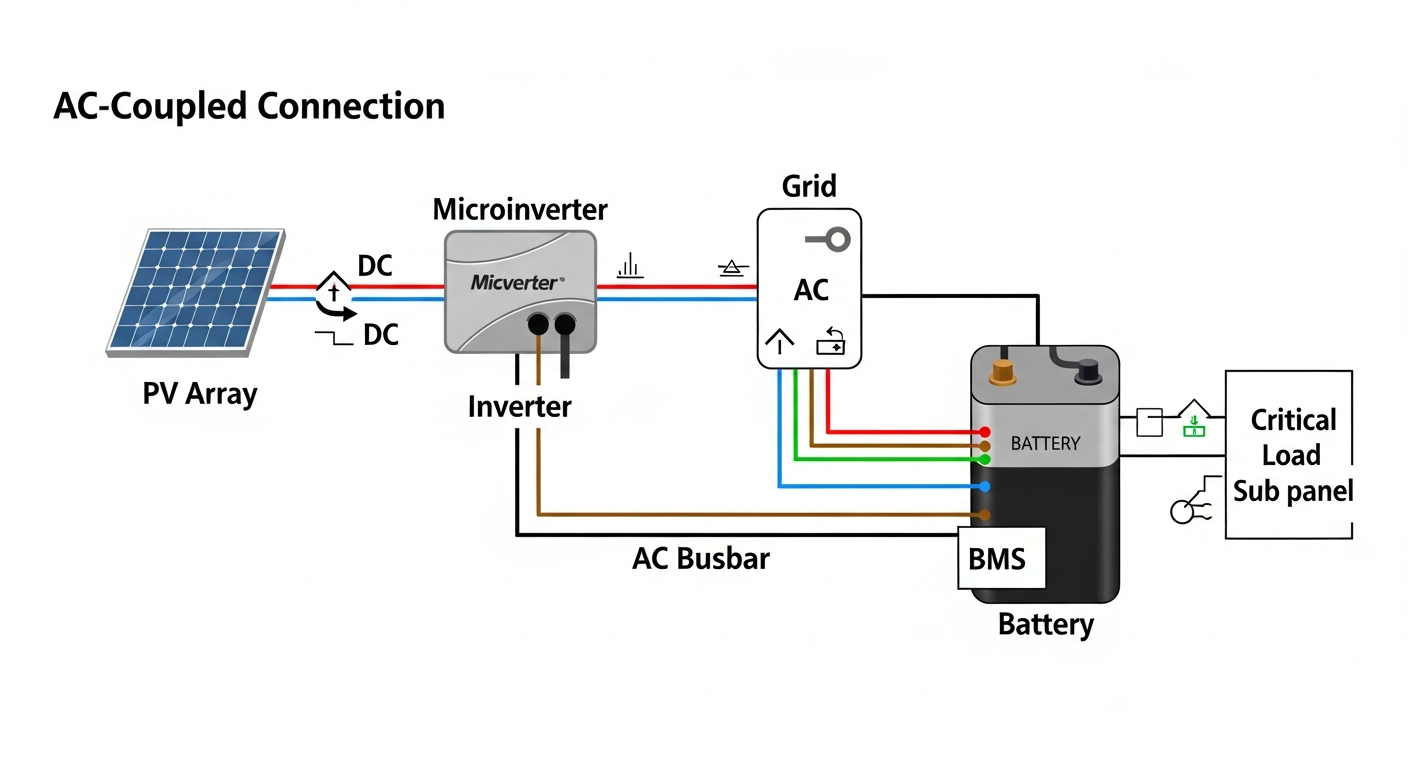
Individual components are useless without a sophisticated control system orchestrating their interaction. This is the digital handshake between the Battery Management System (BMS), the Maximum Power Point Tracking (MPPT) charge controller, and the pure sine wave inverter.
- Battery Management System (BMS): The BMS is the battery’s guardian. It is a dedicated microprocessor that monitors voltage, current, and temperature at the individual cell level. Its primary function is to prevent over-charge, over-discharge, over-current, and thermal extremes by balancing cells and, if necessary, disconnecting the battery pack. A superior BMS uses a multi-layered protection strategy with redundant sensors and failsafes.
- Maximum Power Point Tracking (MPPT): The MPPT controller is the solar harvest optimizer. A solar panel’s voltage and current output vary with sunlight intensity and temperature. The MPPT algorithm constantly sweeps this I-V curve to find the “knee”—the point of maximum power (P = V * I). It then adjusts the electrical load to operate the panel at this optimal point, often boosting efficiency by up to 30% compared to simpler PWM controllers.
- Pure Sine Wave Inverter: The inverter converts the battery’s stored DC power into usable AC power. A pure sine wave inverter is critical because it produces a clean, stable waveform identical to grid power. This is essential for sensitive electronics like laptops, medical devices, and modern appliances, which can be damaged by the “blocky” output of a modified sine wave inverter. The efficiency of this conversion directly impacts the system’s usable energy, a concept detailed in our Solar Inverter Efficiency guide.
These three components are in constant communication. The MPPT reports incoming power to the BMS, which regulates the charge rate based on the battery’s state of charge (SoC) and temperature. The inverter draws power, and the BMS monitors the discharge rate to protect the cells. This closed-loop feedback system is the brain of the power station, and its sophistication is a key differentiator in performance and longevity. Optimizing this system is key to Understanding Round-Trip Efficiency in High-Voltage Energy Storage.
Sizing and System Design: The Engineering Mathematics
Properly sizing a portable power station is a matter of precise calculation, not guesswork. As a manufacturer, we provide these tools to empower our users. The core formula revolves around your energy needs and the system’s inherent efficiencies.
The fundamental equation for determining required battery capacity is:
Required Capacity (Wh) = (Σ (Appliance Power (W) × Runtime (h))) / (η_inverter × DoD_max)
Let’s break this down:
- Σ (Appliance Power × Runtime): This is your total daily energy consumption, or “Load Profile.” You must sum the energy needs of every device you plan to run. For example, a 60W laptop running for 5 hours is 300Wh. A 10W light for 8 hours is 80Wh. Your total load is 380Wh.
- η_inverter (Inverter Efficiency): No conversion is 100% efficient. Energy is lost as heat during the DC-to-AC conversion. A high-quality pure sine wave inverter has an efficiency of ~90% (0.90). This means to deliver 90W to an appliance, it must draw 100W from the battery.
- DoD_max (Maximum Depth of Discharge): This is how much of the battery’s capacity you can safely use. For LiFePO4, this is typically 80-90% (0.80-0.90) to maximize cycle life. Draining a battery to 0% significantly shortens its lifespan.
Furthermore, you must consider Surge Capacity. Motors in refrigerators or power tools draw a large inrush current for a few seconds on startup. The inverter must be rated to handle this peak load, which can be 2-3x the appliance’s continuous running wattage. Finally, Autonomy refers to how many days the system can run without any solar input. For critical applications, you might multiply your daily load by 2 or 3 to calculate the total required capacity. This level of planning is essential for any serious DIY Solar Panel Installation project.
Benchmarking the Market: A 2026 OEM/ODM Comparison
Data-driven comparison is essential for any engineering or procurement decision. The table below benchmarks five leading conceptual models for 2026, focusing on metrics that truly define value and performance. Note the Levelized Cost of Energy (LCOE), a critical ROI metric calculated as: LCOE = Total Lifetime Cost / Total Lifetime Energy Output.
| Model | Capacity (Wh) | Inverter Output (W) | Cycles @ 80% DoD | LCOE ($/kWh) | Warranty (Years) |
|---|---|---|---|---|---|
| SolarKiit Titan 2000 | 2048 | 2400 (4800 Surge) | 4000+ | $0.28 | 10 |
| Competitor A | 1997 | 2200 (4400 Surge) | 3000 | $0.35 | 5 |
| Competitor B (NMC) | 2150 | 2000 (3500 Surge) | 800 | $0.95 | 2 |
| Competitor C | 2016 | 2000 (4000 Surge) | 3500 | $0.31 | 7 |
| Competitor D | 1800 | 1800 (3300 Surge) | 2500 | $0.42 | 5 |
Navigating the Regulatory Maze: A Guide for the Astute portable power station manufacturer
Engineering excellence is incomplete without rigorous adherence to safety and regulatory standards. For a brand or OEM partner, navigating this landscape is paramount to mitigating risk and ensuring market access. A top-tier manufacturer integrates these compliance requirements into the design phase, not as an afterthought.
UL 9540 and UL 1741 SA: The Gold Standards
UL 9540 is the benchmark standard for Energy Storage Systems (ESS). It is a system-level certification that evaluates the safety and interaction of the battery pack, BMS, inverter, and control software. It includes exhaustive testing for thermal runaway propagation, electrical safety, and mechanical robustness. A UL 9540 listing ensures the entire unit has been validated as a safe, integrated system.
Furthermore, for systems capable of grid interaction, UL 1741 SA (Supplement A) is critical. It defines the requirements for “smart” inverters that can support grid stability through functions like voltage and frequency ride-through. Achieving these certifications is a complex and capital-intensive process, a testament to a manufacturer’s commitment to safety. You can learn more from the source at UL Solutions (Solar Safety).
NEC 2026 Projections: What to Expect
The National Electrical Code (NEC), particularly Article 706, governs the installation of ESS. As we look toward the 2026 revision of the NFPA 70: National Electrical Code, we anticipate stricter requirements for rapid shutdown, system labeling, and ventilation. Manufacturers must engineer their products for easy compliance. This includes features like external rapid shutdown initiators and clear, permanent labeling detailing system specifications and safety protocols. Designing for future code compliance today prevents costly redesigns and market access issues tomorrow.
Thermal Runaway & Fire Suppression Protocols
While LiFePO4 chemistry is inherently stable, a multi-layered safety approach is mandatory. This goes beyond the BMS. Physical engineering plays a crucial role.
- Cell Spacing and Thermal Gapping: Individual cells must be spaced to allow for heat dissipation and prevent a thermal event in one cell from propagating to its neighbors.
- Aerogel Thermal Barriers: We integrate advanced insulation materials like silica aerogel between cell packs to provide a robust fire wall.
- Phase-Change Materials (PCMs): Some advanced designs incorporate PCMs that absorb thermal energy during a temperature spike, effectively delaying or preventing thermal runaway.
- Venting and Enclosure Design: The enclosure must be designed to safely vent any gases released during a cell failure, directing them away from the user and sensitive electronics.
If you have specific questions about our compliance engineering or OEM/ODM partnership programs, please do not hesitate to Contact our technical team.
Advanced Engineering FAQ: Insights from a Leading portable power station manufacturer
1. How does bidirectional charging enable Vehicle-to-Grid (V2G) functionality, and what are the engineering hurdles?
Bidirectional charging allows the power station to both charge from and discharge to an external source, like an EV or the grid, but true V2G requires immense technical and regulatory coordination. The core technology is a bidirectional inverter capable of synchronizing its AC waveform with the grid’s frequency and phase to safely export power. The engineering hurdles are significant:
- Grid Synchronization: The inverter must perform anti-islanding, instantly disconnecting from the grid during an outage to protect utility workers. This requires high-speed digital signal processing (DSP) and adherence to IEEE 1547 standards.
- BMS-VMS Handshake: When interacting with an Electric Vehicle (EV), the power station’s BMS must communicate with the Vehicle Management System (VMS) to negotiate charge/discharge rates without degrading the EV’s battery. This requires standardized communication protocols like ISO 15118.
- Cycle Life Management: V2G applications can dramatically increase battery cycles. The BMS must intelligently manage the state of charge to balance grid support with the primary goal of preserving the battery’s lifespan. This is a core consideration when selecting from the Portable Solar Generators available on the market.
2. What are the primary sources of loss that affect round-trip efficiency, and how can they be minimized?
Round-trip efficiency losses stem from electrochemical resistance in the battery and conversion losses in the power electronics, which can be minimized through superior component selection and thermal management. A typical LiFePO4 system has a round-trip efficiency of 85-90%. The losses are broken down as follows:
- Electrochemical (Coulombic) Losses: These are inherent to the battery chemistry and represent the energy lost during the charge/discharge cycle due to internal resistance (Joule heating) and minor side reactions. Minimizing this requires high-purity materials and optimizing the electrode-electrolyte interface.
- Inverter Losses: The DC-to-AC conversion is not 100% efficient. Losses occur in the switching transistors (IGBTs or MOSFETs) and magnetic components. Using Gallium Nitride (GaN) or Silicon Carbide (SiC) semiconductors can significantly reduce switching losses and improve efficiency.
- BMS & Quiescent Draw: The control electronics themselves consume a small amount of power, known as quiescent or parasitic draw. While minor, this can drain the battery over long periods of inactivity. A well-designed system uses ultra-low-power microcontrollers and sleep modes to minimize this.
3. What is the difference between MPPT algorithms like Perturb & Observe (P&O) and Incremental Conductance, and which is better?
Incremental Conductance is a more computationally intensive but more accurate MPPT algorithm, especially under rapidly changing light conditions, making it superior for mobile applications. Both algorithms aim to find the maximum power point of a solar panel, but they do so differently:
- Perturb & Observe (P&O): This is the most common method. The controller slightly increases (perturbs) the panel’s voltage and measures the power output. If power increases, it continues in that direction; if power decreases, it reverses. The main drawback is that it oscillates around the MPP, never settling exactly on it, causing minor efficiency loss.
- Incremental Conductance (IC): This method uses the derivative of the I-V curve. It knows that at the MPP, dP/dV = 0. It compares the instantaneous conductance (I/V) to the incremental conductance (dI/dV). This allows it to track the MPP more precisely and respond faster to changes in irradiance, such as from passing clouds. For the Best Off-Grid Solar Kits of 2024, an IC algorithm is a mark of a premium controller.
4. How does cell-level fusing enhance safety, and what are the trade-offs?
Cell-level fusing isolates a single failing cell from the rest of the battery pack, preventing a cascading failure, but it adds complexity and minor electrical resistance. In a large battery pack, hundreds of individual cells are connected in parallel and series. If one cell experiences an internal short, it can draw massive current from its parallel neighbors, leading to a catastrophic thermal event.
- Safety Mechanism: A cell-level fuse is a tiny, precision-engineered wire bonded to each cell’s terminal. If a cell shorts and attempts to draw excessive current, its dedicated fuse blows, electrically isolating it from the pack. The rest of the pack can continue to operate safely, albeit with slightly reduced capacity.
- Trade-offs: The primary trade-off is a slight increase in the pack’s overall internal resistance, which can marginally reduce peak power output. It also adds complexity and cost to the manufacturing process, as hundreds or thousands of these fuses must be precisely bonded. However, for high-capacity systems, this safety feature is non-negotiable. It’s a core part of our design philosophy for any portable power station.
5. What are the key supply chain differences between sourcing LiFePO4 materials versus NMC, and how does this impact long-term price stability?
The LiFePO4 supply chain is significantly more stable and ethically sound because it avoids cobalt and nickel, materials with volatile pricing and concentrated, often problematic, mining sources. This has profound implications for long-term cost and availability.
- NMC (Nickel Manganese Cobalt): This chemistry relies heavily on cobalt, over 70% of which is mined in the Democratic Republic of Congo, often under poor labor conditions. It also requires high-purity nickel. The prices of both metals are subject to extreme geopolitical volatility and speculation.
- LiFePO4 (Lithium Iron Phosphate): This chemistry uses iron and phosphate, which are abundant, geographically diverse, and inexpensive materials. While it still requires lithium, it eliminates the two most volatile and ethically concerning elements in the battery supply chain. This translates to a more predictable and stable cost structure for the end product.
This supply chain stability is a strategic advantage, ensuring we can deliver on our promises to customers without being subject to the whims of a volatile commodities market. Our commitment to ethical and stable sourcing is detailed in our Privacy Policy. This commitment to first-principles engineering and supply chain integrity is what defines a truly superior portable power station manufacturer.
📥 Associated Resource:

El Kouriani Abde Civil Engineer & Founder of SolarKiit
El Kouriani Abde is a seasoned Civil Engineer and Project Manager with over 21 years of field experience. As the founder and publisher of SolarKiit.com, he leverages his deep technical background to simplify complex renewable energy concepts. His mission is to provide homeowners and professionals with accurate, engineering-grade guides to maximize their solar investments and achieve energy independence.