Batterie domestique : Le Guide Ultime pour l’Autonomie Énergétique et les Économies
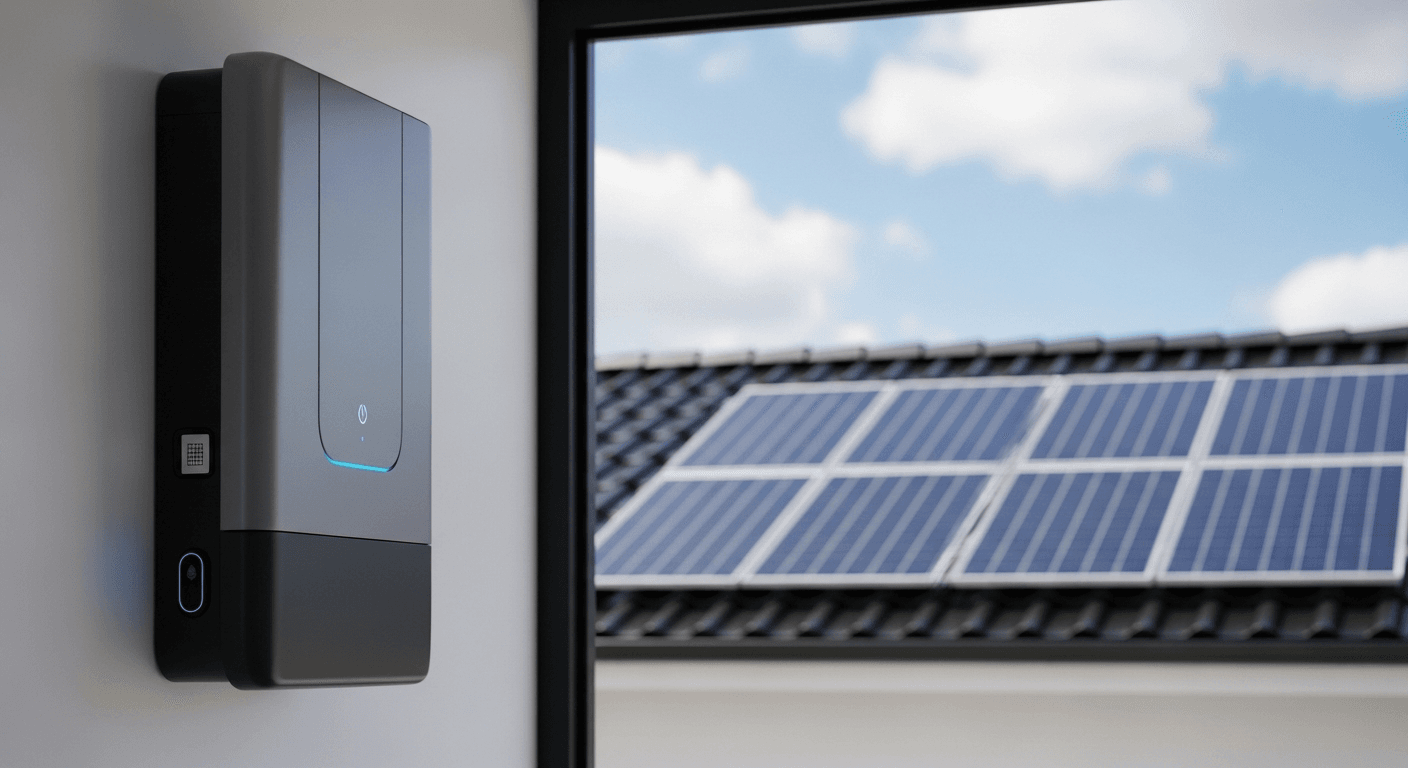
Welcome to the definitive 2026 engineering guide to home battery systems. As the global energy landscape undergoes a seismic shift, the role of the residential Energy Storage System (ESS) has evolved from a luxury backup utility to the central nervous system of the modern, autonomous home. The era of simple grid-tied solar is maturing; we are now firmly in the age of intelligent energy management, where homeowners are becoming active participants—or “prosumers”—in a decentralized grid.
By 2026, the convergence of volatile energy prices, increasingly frequent grid outages, and sophisticated Time-of-Use (TOU) utility tariffs has made energy self-sufficiency a primary financial and security objective. A home battery, or “batterie domestique,” is the core component enabling this transition. It is no longer just about storing excess solar power for nighttime use. It’s about algorithmic optimization of energy flows, participating in Virtual Power Plants (VPPs), and ensuring seamless power continuity for critical home and business operations.
This guide moves beyond marketing claims to deliver a granular, technical analysis of the components, specifications, and strategies required to engineer a resilient and cost-effective home energy solution. We will dissect battery chemistries, inverter topologies, and the critical calculations for system sizing. Our focus is on providing the authoritative knowledge needed to make informed decisions in a market saturated with options, ensuring your investment delivers true energy autonomy and maximum economic return for years to come.
Deep Technical Analysis: From Photon to Usable Power
Understanding a home battery system requires a fundamental grasp of the physics and engineering principles governing its operation. The entire process is a multi-stage energy conversion chain, where efficiency at each step is paramount to the system’s overall performance and return on investment. The goal is to capture, store, and deploy electrical energy with minimal loss.
The Energy Conversion Pathway
The journey begins with the photovoltaic (PV) effect. When photons from sunlight strike a solar panel’s semiconductor material (typically monocrystalline silicon), they excite electrons, creating a direct current (DC) flow. By 2026, high-efficiency Passivated Emitter and Rear Cell (PERC) panels regularly achieve 23-24% conversion efficiency, while emerging perovskite-on-silicon tandem cells are pushing this benchmark to over 26% in commercial applications. This DC power is the raw fuel for your system.
This variable DC voltage is then routed to a charge controller. The dominant technology here is the Maximum Power Point Tracking (MPPT) controller. An MPPT continuously adjusts its electrical input to match the PV array’s optimal operating voltage and current, maximizing power harvest by up to 30% over older PWM controllers, especially in fluctuating light conditions. The MPPT then outputs a stable DC voltage suitable for charging the battery.
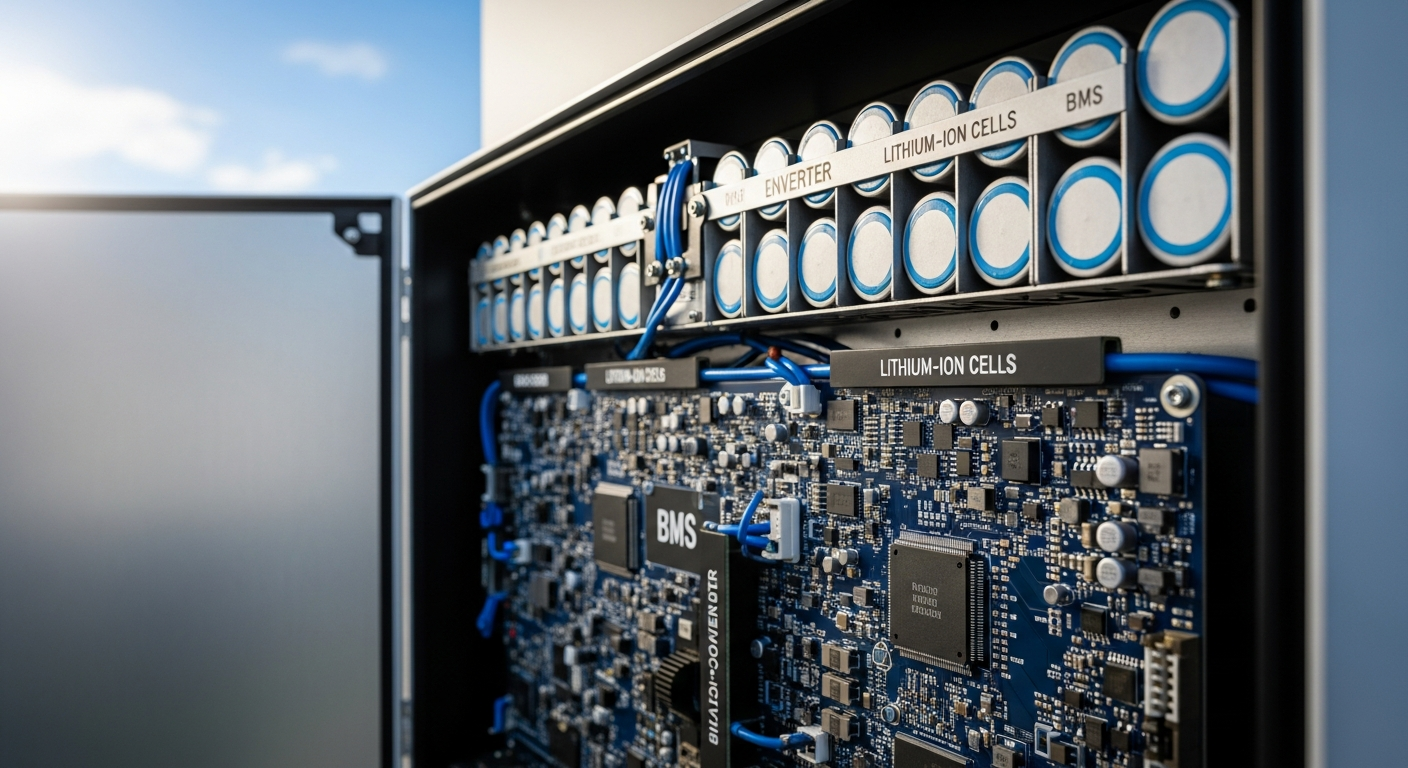
The core of the system is the battery itself, which stores the incoming DC energy via an electrochemical process. The energy is then held until needed. When the home requires power, the battery discharges DC electricity to an inverter. The inverter’s critical function is to convert this low-voltage DC power into the 120/240V alternating current (AC) at 60Hz that powers household appliances. The quality of this conversion is defined by the inverter’s waveform.
Component Efficiency and System Sizing
System efficiency is a product of the efficiencies of its individual components. A key metric is Round-Trip Efficiency (RTE), which measures the percentage of energy put into a battery that can be retrieved. For the leading Lithium Iron Phosphate (LiFePO4) chemistry, RTE is exceptionally high, often exceeding 95%. This means for every 10 kWh sent to the battery, at least 9.5 kWh is available for use.
Inverter efficiency is also critical. Modern pure sine wave inverters, especially transformerless models, boast peak efficiencies of 97-98.5%. However, it’s crucial to analyze the efficiency curve, as performance can drop at very low or very high loads. Losses also occur in wiring (voltage drop), so proper wire gauge selection based on current (amperage) and distance is a non-negotiable aspect of professional design.
Proper system sizing is the most critical engineering task. It begins with a detailed load calculation and energy audit. You must determine your average daily energy consumption in kilowatt-hours (kWh). This is found on your utility bill. Next, identify your critical loads—devices that must remain powered during an outage (e.g., refrigerator, medical equipment, internet router, well pump).
To size the battery capacity (in kWh), use this formula: Required Capacity (kWh) = (Daily Energy Use for Backed-Up Loads) / (Battery Depth of Discharge [DoD] x System RTE). For LiFePO4, the DoD can be as high as 90-100%, a significant advantage over older lead-acid types. For whole-home backup, you might size for 1-2 days of autonomy: `(Total Daily kWh x 1.5) / (0.95 DoD x 0.95 RTE) = Required kWh`.
Sizing the inverter (in kW) is a separate calculation based on power, not energy. You must sum the continuous power draw (in watts) of all devices that could run simultaneously. More importantly, you must account for the peak or surge power of motor-driven appliances like air conditioners or pumps. A system might require a 5 kW continuous-rated inverter that can handle a 10 kW surge for several seconds.
Engineering Specifications & Innovations for 2026
The home battery market of 2026 is defined by advanced battery chemistries, highly integrated system architectures, and intelligent software. While many brands exist, a few have distinguished themselves through superior engineering and innovative features that cater to specific use cases, from plug-and-play modularity to robust off-grid resilience.
Dominance of LiFePO4 and the Horizon of New Chemistries
Lithium Iron Phosphate (LiFePO4 or LFP) has become the de facto standard for residential ESS, and for good reason. Its phosphate-based cathode is structurally and thermally more stable than the Nickel Manganese Cobalt (NMC) chemistry found in many electric vehicles. This stability virtually eliminates the risk of thermal runaway and fire, a paramount safety concern inside a home. Furthermore, LiFePO4 cells offer a superior cycle life, typically rated for 6,000 to 10,000 cycles to 80% of original capacity, translating to a lifespan of 15-20 years in a daily cycling application.
While LiFePO4 reigns supreme, engineers are closely watching the development of sodium-ion (Na-ion) batteries. Though currently offering lower energy density, Na-ion chemistry uses abundant and inexpensive materials (salt), promising a future of lower-cost mass storage. Solid-state batteries, with their potential for even greater safety and energy density, remain primarily in the R&D phase for residential scale, with commercial viability not expected before 2030.
Brand-Specific Architectural Philosophies
Tesla Powerwall 3: By 2026, the Powerwall 3 has refined its all-in-one approach. It features a fully integrated hybrid inverter capable of handling 11.5 kW of continuous power and directly connecting up to 6 solar strings. Its key strength lies in its sophisticated software ecosystem, which seamlessly manages solar self-consumption, TOU arbitrage, and participation in VPPs with minimal user intervention. It is engineered for simplicity and deep grid integration.
EcoFlow DELTA Pro Ultra: EcoFlow champions a modular, high-power philosophy. The DELTA Pro Ultra is a stackable system, allowing users to scale capacity from 6 kWh to a massive 90 kWh. Its primary innovation is the separation of the inverter and battery, allowing for unprecedented power output (7.2 kW continuous, expandable to 21.6 kW) and plug-and-play setup. This makes it ideal for users with very large loads or those who value the flexibility to reconfigure their system.
Victron Energy Systems: Victron represents the pinnacle of customizability and off-grid capability. Rather than an all-in-one product, a Victron system is built from discrete, robust components like the MultiPlus-II inverter/charger, Cerbo GX system controller, and SmartSolar MPPTs. This architecture allows an engineer to design a truly bespoke system optimized for any scenario, from marine applications to complex off-grid homesteads with multiple charging sources (solar, grid, generator). Its strength is its unparalleled control and reliability in demanding environments.
Technical Comparison of Leading 2026 Home Battery Systems
| Model | Usable Capacity (kWh) | Continuous/Peak Power (kW) | Round-Trip Efficiency | Chemistry | Key Engineering Feature |
|---|---|---|---|---|---|
| Tesla Powerwall 3 | 13.5 kWh | 11.5 kW / 22 kW | 90% (PV to AC) | LiFePO4 | Integrated hybrid inverter with 6 MPPT inputs; seamless software ecosystem. |
| EcoFlow DELTA Pro Ultra | 6 kWh per pack (stackable to 90 kWh) | 7.2 kW / 10.8 kW (per inverter) | 95.5% (Battery RTE) | LiFePO4 | Extreme modularity and high-power output; plug-and-play expansion. |
| Enphase IQ Battery 5P | 5.0 kWh (stackable) | 3.84 kW / 7.68 kW | 90% (System RTE) | LiFePO4 | AC-coupled architecture with integrated microinverters for high reliability and simple retrofitting. |
| Victron MultiPlus-II Kit | Custom (e.g., 10-20 kWh) | 5 kW / 10 kW (per unit, stackable) | ~96% (Battery RTE) | LiFePO4 (component-based) | Unmatched customization for complex off-grid and hybrid systems; robust components. |
| Bluetti EP900 + B500 | 9.9 kWh (expandable to 39.6 kWh) | 9 kW / 16.5 kW | >90% (System RTE) | LiFePO4 | High-power split-phase output from a single unit, ideal for whole-home backup. |
Safety, Standards, and Installation Protocols
An Energy Storage System is a high-voltage device that must be treated with the utmost respect for safety. Installation is not a DIY project for the electrically inexperienced. It requires certified professionals who are fluent in national and local electrical codes. Adherence to these standards is mandatory for legal, insurance, and operational safety reasons.
The primary governing standard in the United States is UL 9540, the Standard for Energy Storage Systems and Equipment. This certification ensures that the battery, inverter, and control software have been tested together as a complete system to mitigate hazards like fire and electrical shock. A separate but related standard, UL 1741, covers the inverters, converters, and controllers themselves, ensuring they can safely interact with the utility grid.
The National Electrical Code (NEC) provides the blueprint for safe installation. Specifically, NEC Article 706 outlines requirements for ESS, covering everything from disconnecting means and overcurrent protection to signage and ventilation. For example, it mandates a readily accessible disconnect for the entire system to allow for emergency shutdown by first responders. Proper grounding and bonding are also meticulously detailed to prevent shock hazards.
Physical placement is also governed by codes and manufacturer specifications. Most modern LiFePO4 systems are rated for indoor or outdoor installation, indicated by their Ingress Protection (IP) rating. An IP65 rating means the unit is dust-tight and protected from water jets, making it suitable for most outdoor locations. An IP67 rating signifies it can withstand temporary immersion. Clearances must be maintained around the unit for ventilation to dissipate heat generated during operation, a critical factor managed by the internal Battery Management System (BMS).
The BMS is the unsung hero of battery safety. It is an onboard computer that continuously monitors the voltage, current, and temperature of every cell block. It prevents overcharging, over-discharging, and overheating, and can automatically disconnect the battery if any parameter exceeds its safe operating limits. This active management is what makes modern LiFePO4 systems so inherently safe compared to their predecessors.
Pre-Installation Operational Checklist
Before engaging a certified installer, conducting a thorough preliminary assessment will streamline the process and ensure the proposed system aligns with your objectives. Use this checklist to prepare for your initial consultation.
- Energy Audit: Gather at least 12 months of electricity bills to determine your average daily, monthly, and seasonal kWh consumption. Note any Time-of-Use rate structures.
- Load Identification: Create a list of all appliances and devices in your home. Categorize them into “Critical Loads” (must have power) and “Non-Essential Loads.”
- Site Survey: Identify potential installation locations for the battery unit(s) and inverter. Measure the available wall and floor space in your garage, basement, or an exterior wall. Note the distance to your main electrical panel.
- PV Array Assessment: If you have an existing solar array, document its size (kW), panel type, age, and inverter model. This determines if you need an AC-coupled or DC-coupled system.
- Utility and HOA Review: Check your local utility’s policies on net metering, interconnection agreements, and any available incentives for energy storage. Review your Homeowner’s Association (HOA) covenants for any restrictions on exterior equipment.
- Define Objectives: Clearly articulate your primary goal. Is it for backup power during outages, maximizing solar self-consumption, reducing TOU electricity bills, or achieving full off-grid autonomy?
Advanced Technical FAQ
What are the engineering trade-offs between AC-Coupling and DC-Coupling a battery system?
AC-coupling is ideal for retrofitting a battery to a home with an existing grid-tie solar array. The battery system connects to the home’s AC panel, storing power after it has already been inverted by the solar microinverters or string inverter. While easier to install, it involves more energy conversions (DC-AC-DC-AC), leading to slightly lower round-trip efficiency. DC-coupling, common in new installations or hybrid systems, connects the battery on the DC side of the inverter. This is more efficient as solar power charges the battery directly (DC-DC), but it requires a more complex and costly hybrid inverter.
Is it technically feasible to go completely off-grid with a modern battery system?
Yes, but it requires a significant engineering and financial commitment beyond a standard backup system. An off-grid system must be sized for “worst-case autonomy”—the ability to power the home through several consecutive days of low solar production (e.g., cloudy winter weather). This typically requires oversizing the PV array by 2-3x and the battery bank by 3-5x compared to a grid-tied system. A backup generator (propane or diesel) with an automatic transfer switch is almost always a mandatory component for true off-grid reliability.
How does Vehicle-to-Home (V2H) technology integrate with a dedicated home battery?
V2H and a stationary home battery can be either complementary or redundant. V2H allows a bidirectional EV charger to use the large battery in an electric vehicle (50-100 kWh) to power the home. While this provides massive capacity, it increases the charge/discharge cycles on the vehicle’s battery and is only available when the car is plugged in. A dedicated LiFePO4 home battery offers a much higher cycle life, faster switchover times during an outage, and is always available. A sophisticated strategy uses the home battery for daily cycling and TOU arbitrage, reserving the V2H capability for extended, multi-day outages.
What is “voltage sag” and how does a battery inverter mitigate it?
Voltage sag, or voltage drop, is a temporary decrease in household voltage caused by the sudden high-power demand of a large appliance starting up, like an air conditioner compressor. This can cause lights to flicker and stress sensitive electronics. A quality battery inverter with a large capacitor bank can react in milliseconds, injecting power to stabilize the voltage and “ride through” the surge. This power conditioning function provides cleaner, more stable power than the grid itself, protecting all connected devices.
How do Virtual Power Plants (VPPs) create a revenue stream from a home battery?
A Virtual Power Plant is an aggregation of distributed energy resources (like home batteries) that a utility or grid operator can control to manage grid stability. When you enroll in a VPP program, you give the utility permission to automatically discharge your battery to the grid during periods of extreme peak demand. In return, you are compensated at a premium rate for the energy you provide. The system’s software ensures this is done without compromising your own backup power needs, effectively allowing your battery to earn passive income by selling services back to the grid.
📥 Associated Resource:

El Kouriani Abde Civil Engineer & Founder of SolarKiit
El Kouriani Abde is a seasoned Civil Engineer and Project Manager with over 21 years of field experience. As the founder and publisher of SolarKiit.com, he leverages his deep technical background to simplify complex renewable energy concepts. His mission is to provide homeowners and professionals with accurate, engineering-grade guides to maximize their solar investments and achieve energy independence.