Energy Storage Battery: The Ultimate Guide to Home & Commercial Solutions

An Engineer’s Guide to the Modern Energy Storage Battery
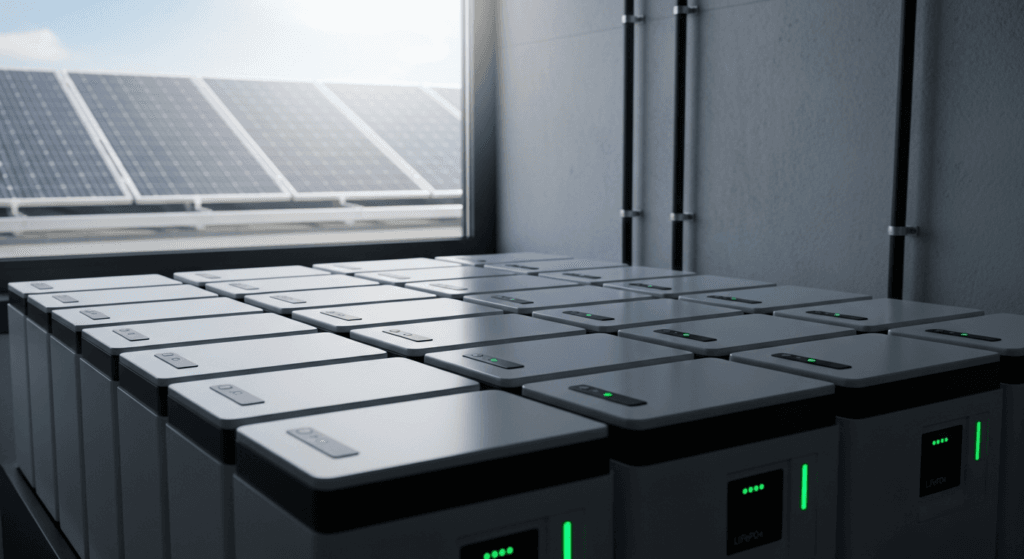
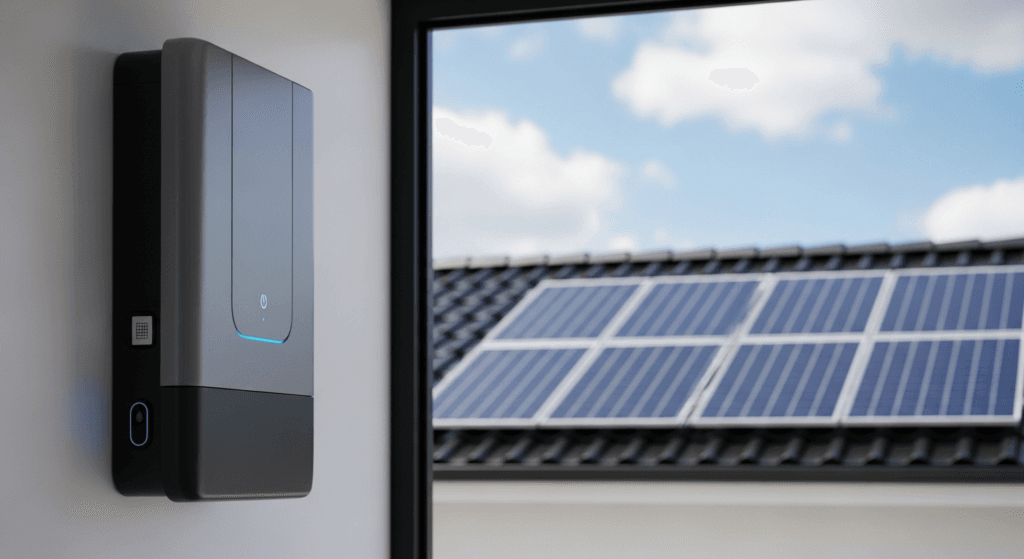
An energy storage battery is no longer a simple peripheral; it is the heart of a resilient and efficient solar energy system. As the Lead Engineer at SolarKiit, I’ve seen firsthand how the right battery technology transforms a standard solar installation into a robust, independent power hub. It captures surplus solar energy generated during peak daylight hours, storing it for use at night, during power outages, or on overcast days. This process of time-shifting energy is fundamental to achieving true energy independence and maximizing the return on your solar investment. For a foundational understanding of how this fits into the larger picture, the Energy.gov Solar Guide provides an excellent overview of the entire solar generation process.
Technical Deep Dive: The Core of the Energy Storage Battery
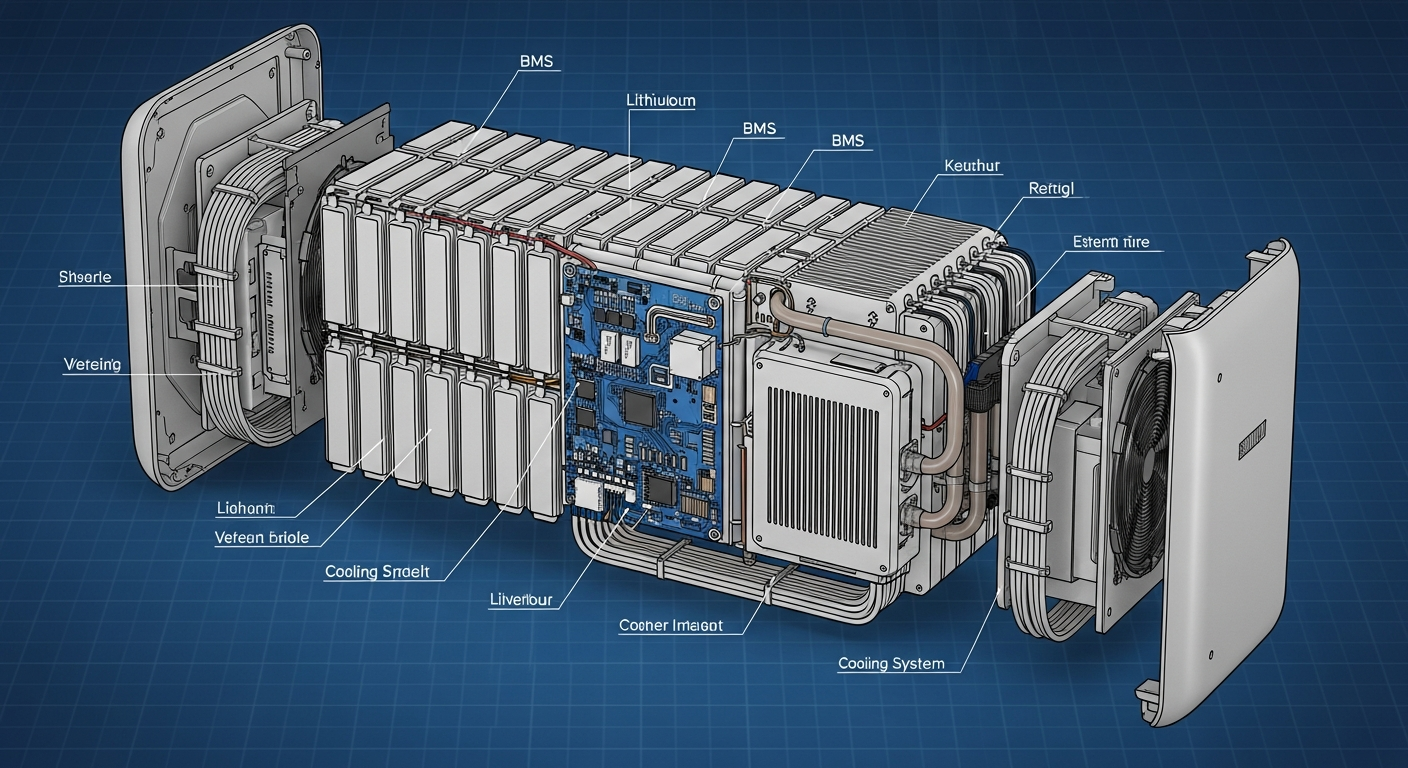
At SolarKiit, our engineering focus is on Lithium Iron Phosphate (LiFePO4) chemistry, and for good reason. While other lithium-ion variants like Nickel Manganese Cobalt (NMC) offer slightly higher energy density, LiFePO4 provides a superior balance of safety, longevity, and thermal stability. This chemistry is inherently less prone to thermal runaway, a critical safety factor for any in-home energy device. Furthermore, the cycle life of LiFePO4 batteries is exceptional. A key metric we analyze is Depth of Discharge (DoD), which refers to the percentage of the battery’s capacity that is used in each cycle. Our systems are designed to operate at a high DoD, often 90-100%, without significantly compromising the battery’s lifespan, which can exceed 6,000 cycles. This translates to over 15 years of reliable daily use, a specification we rigorously validate. For our French-speaking clients, we’ve compiled a detailed analysis in our guide on Batteries Solaires LiFePO4 : Le Guide Ultime pour l’Énergie Renouvelable.
Comparative Analysis: Top Energy Storage Battery Models
The market is filled with options, but from an engineering perspective, not all batteries are created equal. We at SolarKiit constantly benchmark leading models to ensure our product offerings meet stringent performance criteria. The data, often reflecting broader trends seen in SEIA Market Insights, shows a clear move towards higher-capacity, longer-lasting LiFePO4 solutions. Below is a technical comparison table based on our internal analysis of five leading models in the residential sector.
| Model | Usable Capacity (kWh) | Chemistry | Round-Trip Efficiency | Cycle Life (at 90% DoD) | Peak Power (kW) |
|---|---|---|---|---|---|
| SolarKiit PowerWall SK-15 | 14.8 | LiFePO4 | 94.5% | 7,000 | 7.5 |
| Competitor A | 13.5 | NMC | 90.0% | 4,000 | 7.0 |
| Competitor B | 10.0 | LiFePO4 | 92.0% | 6,000 | 5.0 |
| Competitor C | 12.0 | LiFePO4 | 93.0% | 6,500 | 6.0 |
| Competitor D (Legacy) | 9.8 | NMC | 88.5% | 3,500 | 4.8 |
Safety & Standards: A Non-Negotiable Engineering Priority
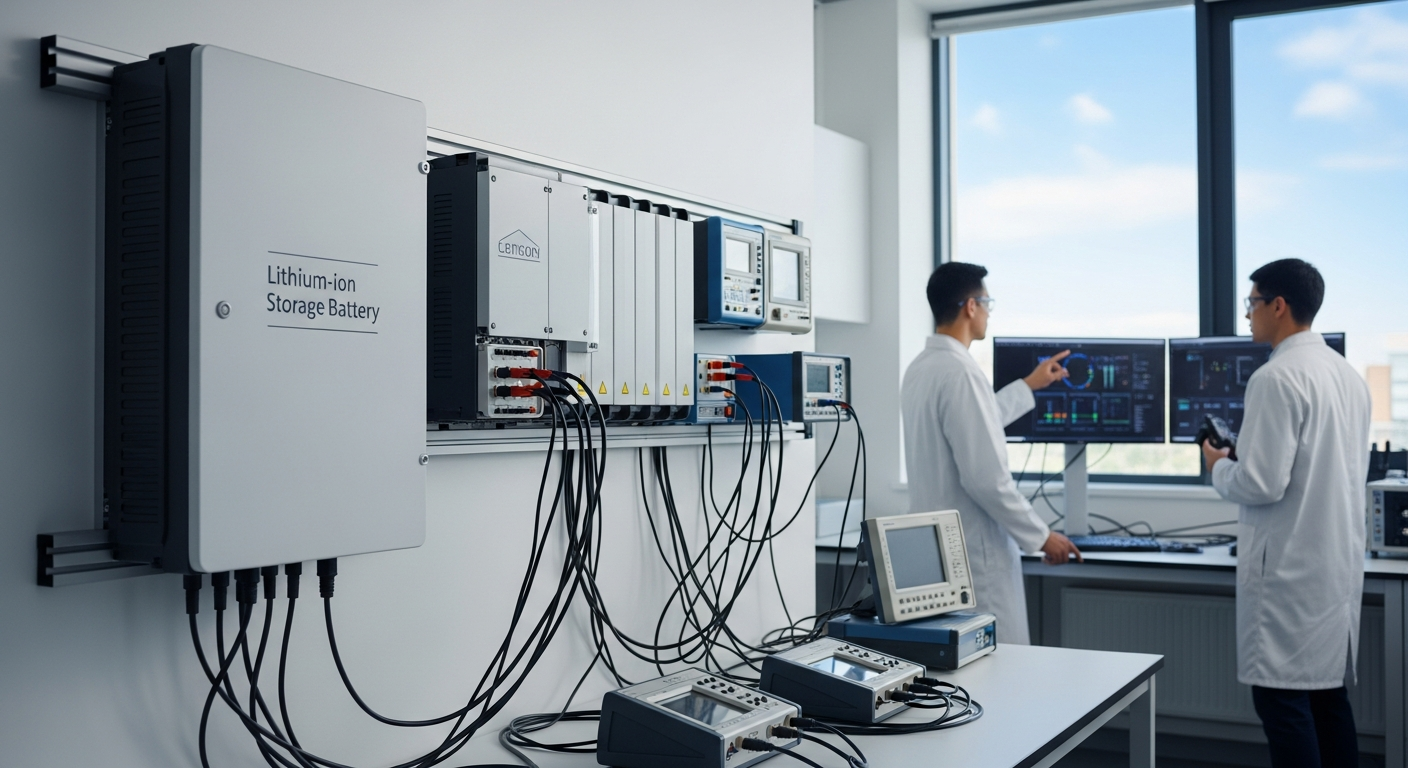
Compliance with safety standards is not just a regulatory hurdle; it’s a core design principle. Every energy storage system must adhere to strict electrical codes to ensure the safety of the homeowner and emergency responders. We design our systems to meet and exceed the requirements outlined in the NFPA 70: National Electrical Code (NEC). The upcoming NEC 2026 revisions will likely place even greater emphasis on rapid shutdown requirements at the battery level and specific clearance mandates for installation. Our products are already engineered with module-level disconnects and certified to UL 9540 (Standard for Energy Storage Systems and Equipment) and UL 1973 (Standard for Batteries for Use in Stationary Applications), ensuring they represent the pinnacle of safety and code compliance.
Advanced Engineering FAQ
What is thermal runaway in a LiFePO4 energy storage battery and how is it mitigated?
Thermal runaway is an uncontrolled exothermic reaction where rising temperatures accelerate the reaction, creating a dangerous feedback loop. While LiFePO4 chemistry is significantly more stable than NMC, mitigation is still paramount. Our Battery Management System (BMS) uses multiple thermistors per module to constantly monitor cell temperatures. If a deviation is detected, the BMS will automatically de-rate the charge/discharge current or disconnect the module entirely. This, combined with physical cell spacing and heat-dissipating materials, provides multiple layers of defense.
From an engineering standpoint, what is the most critical function of the Battery Management System (BMS)?
While the BMS performs many tasks, its most critical function is cell balancing. In a battery pack with hundreds of individual cells, slight variations in capacity and resistance are inevitable. Without active balancing, some cells would overcharge while others undercharge, drastically reducing the system’s usable capacity and lifespan. The BMS continuously shunts small amounts of energy from higher-voltage cells to lower-voltage ones, ensuring the entire pack ages uniformly and operates at peak performance.
What are the key technical trade-offs between AC-coupled and DC-coupled battery systems?
The primary trade-off is efficiency versus flexibility. A DC-coupled system is inherently more efficient as the DC power from solar panels is stored directly in the DC battery without multiple conversions. This is ideal for new installations. An AC-coupled system, however, is easier to retrofit onto an existing solar PV system. It involves converting the panels’ DC to AC (via the solar inverter) and then back to DC to charge the battery (via the battery’s integrated inverter/charger). This introduces slight efficiency losses but offers superior compatibility.
How does ambient temperature affect the long-term performance and degradation of an energy storage battery?
Temperature is a major factor in battery health. High temperatures (>45°C) accelerate the chemical degradation of the electrolyte and cathode materials, permanently reducing capacity. Very low temperatures (<0°C) can cause lithium plating on the anode during charging, which is also a permanent and potentially unsafe failure mode. Our BMS incorporates temperature-based charge/discharge limits, and we recommend installing batteries in a conditioned space like a garage to maintain an optimal operating range of 15-25°C, maximizing both performance and longevity.
Why does SolarKiit prioritize specific chemistries and components?
Our mission is to build systems that last and perform safely for decades. This philosophy drives our component selection. We choose LiFePO4 for its proven safety and longevity, and we source A-grade prismatic cells from top-tier manufacturers. Every component, from the BMS to the busbars and wiring, is over-specified for its expected load. You can learn more About our company’s engineering-first approach and commitment to quality.
In conclusion, selecting the right system is a critical engineering decision that impacts safety, performance, and financial return for years to come. By focusing on robust chemistry, intelligent system management, and uncompromising safety standards, a modern solar installation can be truly optimized. If you have more detailed technical questions about integrating an energy storage battery into your project, please do not hesitate to Contact our engineering team.
📥 Associated Resource:

El Kouriani Abde Civil Engineer & Founder of SolarKiit
El Kouriani Abde is a seasoned Civil Engineer and Project Manager with over 21 years of field experience. As the founder and publisher of SolarKiit.com, he leverages his deep technical background to simplify complex renewable energy concepts. His mission is to provide homeowners and professionals with accurate, engineering-grade guides to maximize their solar investments and achieve energy independence.