Portable Solar Generators: The Ultimate Guide to Off-Grid Power & Emergency Backup

Strategic Overview: The 2026 Portable Power Paradigm
By 2026, the landscape of portable power has fundamentally shifted. No longer a niche accessory for digital nomads, the portable solar generator has become an essential component of modern energy resilience. This evolution is driven by a confluence of factors: increasing grid instability due to extreme weather events, the maturation of battery and photovoltaic technologies, and a societal move towards decentralized energy solutions.
The market is now characterized by high-capacity, modular systems that blur the line between portable convenience and fixed home backup. The core technology has standardized around Lithium Iron Phosphate (LiFePO4) battery chemistry, prized for its safety and exceptional cycle life. This has relegated older Lithium Nickel Manganese Cobalt Oxide (NMC) chemistries to budget or legacy systems, as consumers and engineers alike prioritize longevity and thermal stability.
Furthermore, the synergy with the Electric Vehicle (EV) sector has accelerated innovation. Bidirectional charging capabilities, once a high-end EV feature, are beginning to appear in flagship portable power stations, allowing them to integrate with vehicle-to-load (V2L) systems. In 2026, a portable solar generator is not just a battery box; it is an intelligent energy hub, capable of sophisticated load management, rapid solar charging via advanced MPPT controllers, and seamless integration with a growing ecosystem of smart devices and expandable battery packs.
Deep Technical Analysis: The Engineering of Portable Energy
A portable solar generator is a complex integration of four primary subsystems. Understanding the engineering principles behind each is critical to evaluating and selecting a unit that meets stringent performance and safety requirements. These systems are the Photovoltaic (PV) Input & Charge Controller, the Energy Storage System (ESS), the Battery Management System (BMS), and the Inverter.
The Physics of Energy Conversion: From Photon to Electron
The process begins with the photovoltaic effect in the solar panels. When photons from sunlight strike a semiconductor material (typically monocrystalline silicon), they excite electrons, creating a direct current (DC). The efficiency of this conversion is a key metric. By 2026, high-end monocrystalline TOPCon (Tunnel Oxide Passivated Contact) and HJT (Heterojunction) cells regularly achieve 23-25% efficiency in field conditions, a significant leap from previous generations.
This raw DC power is then fed into the generator’s Maximum Power Point Tracking (MPPT) charge controller. An MPPT is a sophisticated DC-to-DC converter that constantly adjusts the electrical operating point (voltage and current) of the solar array to extract the maximum possible power. It actively sweeps the I-V (current-voltage) curve of the panels to find the ‘knee’ where P = V * I is maximized. Modern MPPTs boast tracking efficiencies exceeding 99%, a stark contrast to older, less efficient Pulse-Width Modulation (PWM) controllers which simply clip voltage.
Energy Storage & Management: The LiFePO4 Revolution
The regulated DC power from the MPPT charges the internal battery, the heart of the system. The dominant chemistry in 2026 is LiFePO4. Its crystalline structure is more robust than that of NMC or NCA, making it highly resistant to thermal runaway, even if punctured or overcharged—a critical safety feature. This stability comes with an exceptional cycle life, with leading models offering 3,500 to 6,000 full charge/discharge cycles before reaching 80% of original capacity. This translates to over a decade of daily use.
Overseeing the battery is the Battery Management System (BMS). This embedded computer is the unsung hero of the system, providing real-time protection against over-voltage, under-voltage, over-current (short circuits), and extreme temperatures. An advanced BMS also performs cell balancing, ensuring all individual cells within the battery pack maintain an equal state of charge, which is crucial for maximizing both the pack’s lifespan and its usable capacity.
The Inverter: Crafting Usable AC Power
Most household appliances run on Alternating Current (AC), not the DC power stored in the battery. The inverter’s job is to perform this conversion. The critical specification here is the waveform. All reputable 2026 models utilize a Pure Sine Wave inverter. This technology produces a clean, smooth electrical signal identical to grid power, with low Total Harmonic Distortion (THD < 3%).
This is non-negotiable for powering sensitive electronics like laptops, medical devices (CPAP machines), and modern appliances with microprocessors. Cheaper, modified sine wave inverters produce a choppy, stepped approximation of a sine wave that can damage or destroy such devices. Inverter efficiency, typically 90-95%, and its continuous and surge power ratings (in Watts) are the final key metrics, determining what appliances the unit can run simultaneously.
Load Calculation and System Sizing Strategy
Properly sizing a generator is an engineering exercise. First, audit your required loads. List every appliance you intend to power. Note both its continuous running wattage (W) and its starting/surge wattage (e.g., a refrigerator’s compressor kicking on). The generator’s inverter must have a continuous rating higher than your total simultaneous running watts and a surge rating that can handle the largest starting load.
Second, calculate your total energy consumption in Watt-hours (Wh). This is done by multiplying each appliance’s running wattage by the number of hours you’ll use it per day (e.g., a 100W fridge running for 8 hours/day consumes 800Wh). Sum these values to get your daily energy requirement. The generator’s battery capacity (in Wh) should be at least 25% larger than this figure to account for inefficiencies and provide a buffer.
Finally, size your solar array. A 400W solar panel array in an area with 4 average peak sun hours per day will generate approximately 1600Wh (400W * 4h). To recharge a 2000Wh battery from empty in a single day, you would need a solar array capable of generating more than 2000Wh, accounting for system losses (typically 15-20%). Therefore, a solar array of at least 600W would be a more realistic target for reliable daily recharging.
Engineering Specifications & Innovations in 2026
The portable power market is fiercely competitive, with innovation focused on modularity, charging speed, and the integration of next-generation materials. Leading brands have developed proprietary technologies that define their competitive edge.
Brand-Specific Technological Ecosystems
EcoFlow’s DELTA Pro Ecosystem: EcoFlow continues to lead in modularity and home integration. Their 2026 flagship, the DELTA Pro 2, features stackable 4kWh LiFePO4 battery packs, allowing users to scale capacity up to 20kWh. The key innovation is their Smart Home Panel 2, which allows the system to function as an uninterruptible power supply (UPS) with a sub-20ms switchover time, directly powering designated home circuits during an outage.
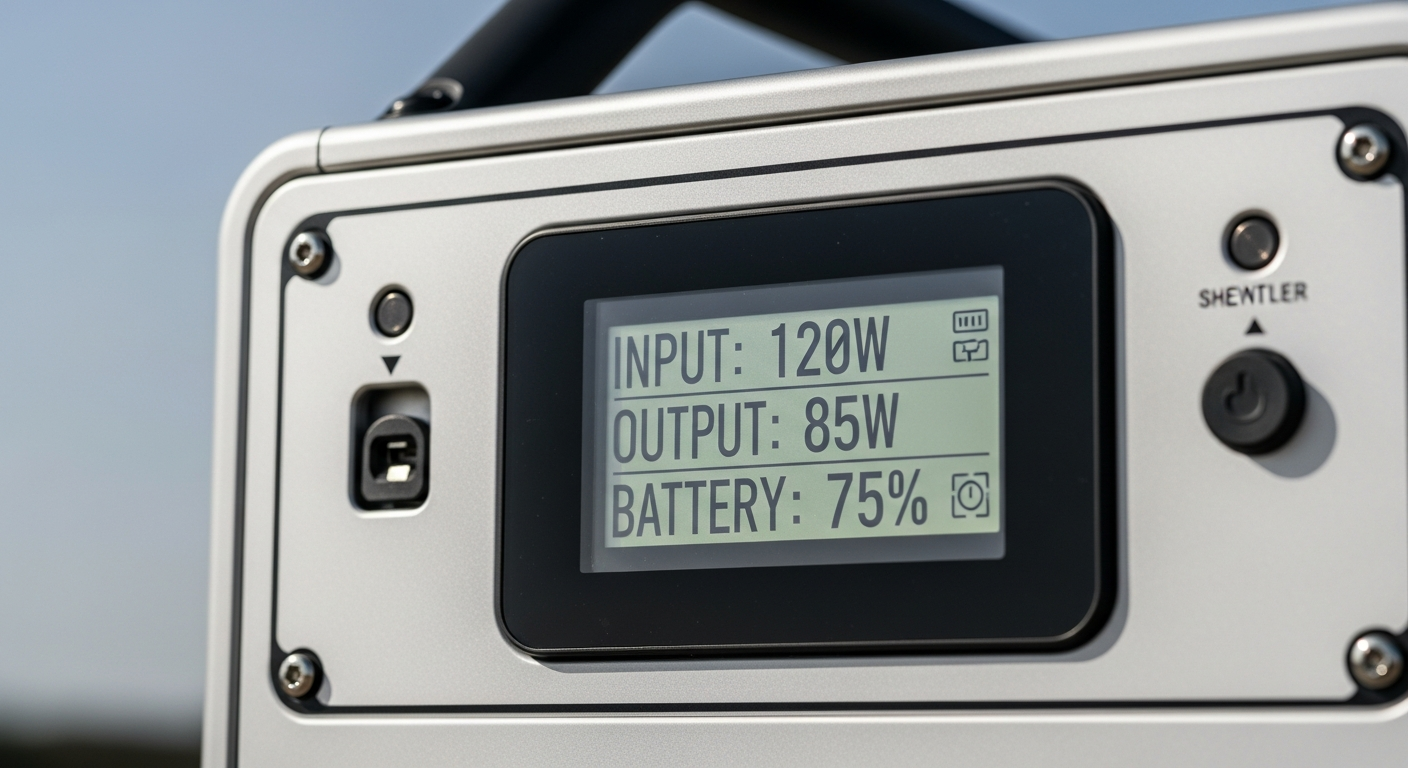
Bluetti’s Split-Phase Power: Bluetti has carved a niche in high-power applications. Their AC600 MAX system allows two units to be bonded via a fusion box. This creates a 240V split-phase output, capable of running large appliances like well pumps, electric dryers, or Level 2 EV chargers. This feature effectively transforms two portable units into a legitimate whole-home backup solution, a feat previously reserved for stationary systems.
Victron Energy’s Pro-Grade Components: For professionals and serious DIYers (van conversions, marine applications), Victron remains the gold standard. Rather than an all-in-one box, Victron offers discrete, over-engineered components. Their SmartSolar MPPT charge controllers, MultiPlus inverter/chargers, and Cerbo GX system controllers offer unparalleled configuration, monitoring, and efficiency. This allows for the creation of highly customized and robust off-grid power systems tailored to specific engineering requirements.
Emerging Materials: The Perovskite Promise
The most exciting material science development impacting the 2026 portable solar market is the commercialization of Perovskite-on-Silicon tandem solar cells. Perovskites are a class of materials with a specific crystal structure that are exceptionally good at absorbing the higher-energy (blue) part of the solar spectrum, while traditional silicon excels at the lower-energy (red) part. By layering a thin, semi-transparent perovskite cell on top of a conventional silicon cell, these tandem panels capture a much wider range of solar energy.
While standalone perovskite cells still face long-term stability challenges, these tandem cells leverage the proven durability of silicon as a base. By 2026, premium portable solar panels featuring this technology are achieving efficiencies of 28-30%. This allows for a 400W panel to have the same physical footprint as a previous-generation 300W panel, dramatically improving the power-to-weight ratio and making off-grid energy harvesting more practical than ever.
Technical Comparison of 2026 Leading Models
| Model | Battery Capacity (Wh) | Battery Chemistry | Inverter Output (W) | Solar Input (W) | Cycle Life (to 80%) | Key Feature |
|---|---|---|---|---|---|---|
| EcoFlow DELTA Pro 2 | 4096 (Expandable to 20kWh) | LiFePO4 | 4000W Continuous, 7500W Surge | 2400W | 4,000+ | Seamless home integration with Smart Panel 2 |
| Bluetti AC600 MAX | 4096 (Expandable to 16kWh) | LiFePO4 | 5000W Continuous, 10000W Surge | 3000W | 3,500+ | 240V Split-Phase bonding capability |
| Anker SOLIX F4000 | 3840 | LiFePO4 | 4000W Continuous, 6000W Surge | 2000W | 3,000+ | Compact design, integrated wheels and handle |
| Victron Custom Pro Kit | User Defined (e.g., 5120) | LiFePO4 (User Choice) | User Defined (e.g., 5000VA MultiPlus) | Scalable via multiple MPPTs | 6,000+ (Battery Dependent) | Ultimate customization and component quality |
| Aura PowerFlex 2000 | 2048 | LiFePO4 | 2200W Continuous, 4800W Surge | 1200W (Optimized for Perovskite) | 4,000+ | Bundled with lightweight Perovskite-tandem panels |
Safety Protocols & Engineering Standards
Operating a high-capacity energy storage system, even a portable one, demands strict adherence to safety standards. Reputable manufacturers design their products to meet rigorous international and national codes, ensuring user safety and equipment longevity.
Electrical Safety and Code Compliance
While a standalone portable generator doesn’t require the same permitting as a fixed solar installation, the principles of electrical safety are paramount. All AC outlets on a quality unit must be protected by a Ground Fault Circuit Interrupter (GFCI), which prevents electric shock. For larger systems intended for home backup, any connection to the home’s wiring must be made via a transfer switch (manual or automatic) installed by a licensed electrician. This is a critical requirement under NEC Article 702 to prevent dangerous back-feeding onto a utility grid that workers may believe is de-energized.
Environmental Ingress Protection (IP Ratings)
IP ratings define a device’s resistance to solids (dust) and liquids (water). A common rating for high-quality portable generators is IP65. The ‘6’ indicates it is fully dust-tight, while the ‘5’ means it is protected against low-pressure water jets from any direction. This does not mean it can be used in a downpour. A higher rating, like IP67, means the unit can be submerged in up to 1 meter of water for 30 minutes. It’s crucial to understand that this rating applies to the sealed casing; ports and connections may not be protected while in use.
Battery and Fire Safety Protocols
The adoption of LiFePO4 chemistry has dramatically improved the intrinsic safety of these devices. However, the immense energy density still warrants caution. The BMS is the primary line of defense, but physical precautions are also necessary. Always operate the unit in a well-ventilated area to allow for heat dissipation from the inverter and battery during heavy load or fast charging. Never block cooling fans. It is highly recommended to keep a Class ABC multi-purpose dry chemical fire extinguisher readily accessible. Do not attempt to extinguish a lithium-ion battery fire with water.
Pre-Installation & First Use Checklist
- Initial Inspection: Upon unboxing, thoroughly inspect the generator and all accessories for any signs of shipping damage. Do not use if the casing is cracked or compromised.
- BMS Calibration Charge: Before its first use, plug the generator into a standard AC wall outlet and charge it to 100%. This allows the BMS to calibrate and accurately measure the battery’s state of charge.
- Load Verification: Confirm that your calculated total continuous and surge wattage requirements are well within the generator’s specified limits to prevent overload shutdowns.
- Solar Panel Compatibility Check: Cross-reference your solar panel’s Open Circuit Voltage (Voc) with the generator’s maximum solar input voltage limit. Exceeding this limit can permanently damage the MPPT controller.
- PV Orientation Planning: For optimal solar harvesting in the Northern Hemisphere, plan to orient your panels facing true south. Use a sun path calculator app to identify and avoid potential shading from trees or buildings throughout the day.
- Minimize Voltage Drop: For cable runs between your panels and generator longer than 15 feet, use heavy-gauge cables (10 AWG or thicker) to minimize power loss due to voltage drop.
- Manual Review: Read the manufacturer’s user manual completely. Pay special attention to all safety warnings, operating temperature ranges, and specific maintenance recommendations.
Advanced Engineering FAQ
Can I connect a portable solar generator directly to my home’s breaker panel?
No, absolutely not. Directly connecting any generator to a breaker panel without a proper transfer switch is extremely dangerous and illegal. This action can back-feed power onto the grid, creating a lethal hazard for utility workers. A licensed electrician must install a manual or automatic transfer switch, which safely isolates your home from the grid before engaging the generator’s power, as mandated by NEC Article 702.6.
What is the real-world impact of “pass-through charging” and should I use it?
Pass-through charging allows the unit to power devices from its inverter while it is simultaneously being charged (either from solar or AC). While convenient, it generates significant excess heat as both the charging and inverting circuits operate at once. This elevated temperature can accelerate battery degradation over the long term. It’s best used for convenience, but for optimal battery longevity, it’s better to charge the unit fully and then discharge it to power your devices whenever possible.
How does the temperature coefficient of a solar panel affect my charging performance?
The temperature coefficient, typically expressed as a percentage per degree Celsius (%/°C), quantifies how much a panel’s power output decreases as its temperature rises above the 25°C (77°F) standard test condition. For example, a panel with a -0.35%/°C coefficient will lose 0.35% of its maximum power for every degree above 25°C. On a hot, sunny day, a panel’s surface can reach 65°C (149°F), a 40°C increase. This would result in a power loss of 40 * 0.35% = 14%. Your 400W panel is now, at best, a 344W panel.
Why is a LiFePO4 battery with 3,500 cycles better than an NMC battery with 800 cycles?
This is a question of Levelized Cost of Storage (LCOS) and total lifetime energy throughput. A 2000Wh LiFePO4 unit rated for 3,500 cycles can deliver a total of 7,000,000 Wh (7,000 kWh) over its life. A 2000Wh NMC unit rated for 800 cycles can only deliver 1,600,000 Wh (1,600 kWh). Even if the LiFePO4 unit costs more upfront, it delivers over four times the energy, making its cost-per-kWh stored and delivered significantly lower and a far superior long-term investment.
What is “split-phase” output and why would I need it for a portable unit?
Standard U.S. household power is 120V. However, large, high-power appliances like electric water heaters, central air conditioners, and well pumps run on 240V. This 240V service is delivered as a “split-phase” supply (two 120V hot lines 180 degrees out of phase with each other). High-end portable systems, like some from Bluetti, allow two identical units to be linked together. This synchronizes their inverters to produce a true 240V split-phase output, enabling them to power these larger appliances and function as a more comprehensive home backup solution.
📥 Associated Resource:

El Kouriani Abde Civil Engineer & Founder of SolarKiit
El Kouriani Abde is a seasoned Civil Engineer and Project Manager with over 21 years of field experience. As the founder and publisher of SolarKiit.com, he leverages his deep technical background to simplify complex renewable energy concepts. His mission is to provide homeowners and professionals with accurate, engineering-grade guides to maximize their solar investments and achieve energy independence.